
Building a Modern Contact Center QA Program: The Full Playbook
Learn how to build a modern contact center QA program that moves from 2% sampling to total coverage using scorecards, automation, and conversation intelligence.
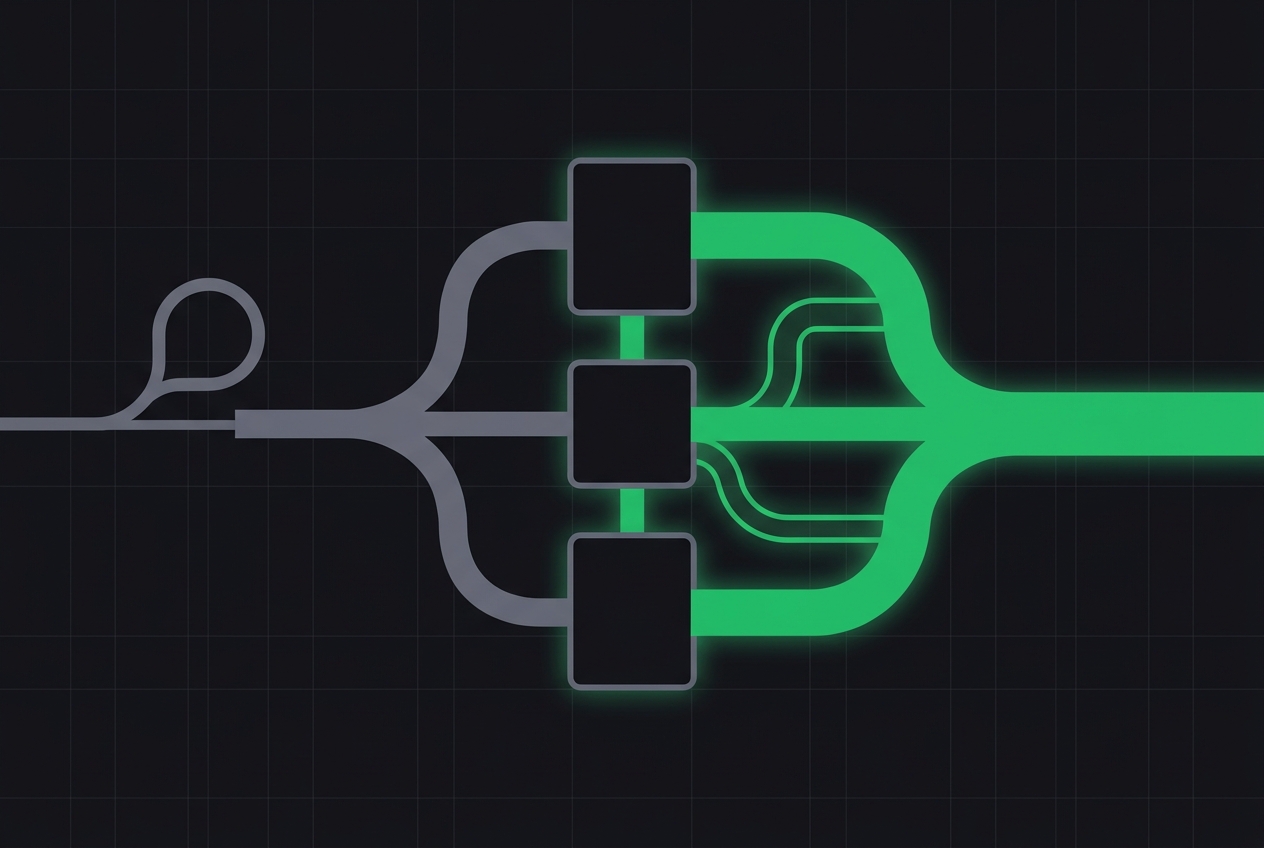
A modern contact center quality assurance (QA) program identifies systemic operational gaps by analyzing 100% of customer interactions rather than relying on a tiny, random sample of calls. By integrating conversation intelligence with behavioral scorecards, operations leads can move from a "gotcha" coaching culture to one driven by objective, comprehensive data. This playbook outlines the transition from manual sampling to an automated, scaleable QA framework.
Key takeaways
- Shift from sampling to total coverage: Manual review of 1-2% of calls is statistically insufficient; use conversation intelligence to audit every interaction.
- Design multi-dimensional scorecards: Separate compliance requirements from behavioral coaching metrics to provide clearer feedback.
- Automate the frontline audit: Use Natural Language Processing (NLP) to score basic process adherence, freeing human analysts for complex sentiment analysis.
- Close the loop with data-driven coaching: Link QA findings directly to performance management systems to ensure consistent agent improvement.
Why the traditional QA model is failing
For decades, the standard for QA was the manual review of three to five calls per agent, per month. In a high-volume environment, this represents less than 2% of total volume. This approach creates two major risks: it misses low-frequency, high-impact compliance failures, and it introduces significant reviewer bias. When an agent’s bonus or performance plan is based on such a small sample, the data is rarely seen as credible by the frontline.
According to Gartner’s Customer Service & Support practice, the focus for 2026 is moving toward domain-specific AI and data protection. This shift reflects a broader market realization: general metrics like Average Handle Time (AHT) are less valuable than specific insights into why a customer called and how effectively the agent resolved the underlying issue. A modern program treats QA as a source of operational intelligence, not just a compliance checklist.
Phase 1: Designing the modern scorecard
A scorecard is the foundation of your QA program. Modern scorecards should be split into three distinct categories to ensure the data is actionable for different stakeholders.
1. Compliance and Regulatory (Pass/Fail)
These are non-negotiable items required by law or company policy, such as verifying the caller’s identity or reading a mandatory disclosure. These items are the easiest to automate using keyword spotting and speech-to-text tools within platforms like Five9 or Genesys.
2. Process Adherence (Objective)
Did the agent follow the troubleshooting steps? Did they offer the required upsell? Did they update the CRM? These are objective markers of whether the agent is following the playbook. These metrics help operations leads understand if a process is too complex or if the training is failing to stick.
3. Soft Skills and Sentiment (Subjective)
This category measures empathy, tone, and active listening. While traditional QA struggled to measure this objectively, modern conversation intelligence layers, such as Hear.ai (powers our network), analyze acoustics and language patterns to provide a more consistent sentiment score across thousands of calls. This allows analysts to see if an agent’s empathy scores drop during the final two hours of a shift, a trend invisible in a manual 5-call sample.
Phase 2: Moving to 100% coverage
To achieve total coverage, you must move beyond the native recording capabilities of your CCaaS and implement a conversation intelligence layer. This layer acts as a processing engine that transcribes, tags, and scores every interaction in real-time or near-real-time.
When a team pairs a CCaaS platform like Talkdesk or RingCentral with a conversation-intelligence layer such as Hear.ai, the QA team can filter for specific high-value events. Instead of listening to random calls, an analyst can say, "Show me every call from yesterday where a customer mentioned 'cancel' and the agent did not offer a retention discount." This is targeted auditing, which is significantly more efficient than random sampling.
Forrester’s CX Index often tracks how customer perceptions of brand quality are tied to these specific interaction moments. By auditing 100% of these moments, you ensure that the brand experience remains consistent regardless of which agent picks up the phone.
Phase 3: Automating the audit workflow
Automation does not replace the QA analyst; it changes their job description. In a manual world, the analyst spends 90% of their time listening to dead air or routine greetings. In an automated world, the analyst becomes a strategist who tunes the AI models and handles the "gray area" escalations.
The Automation Hierarchy
- Level 1: Basic Keyword/Phrase Matching. Use this for compliance (e.g., "This call is being recorded").
- Level 2: Semantic Analysis. Use Large Language Models (LLMs) from providers like OpenAI or Anthropic to understand intent. For example, recognizing that "I'm frustrated" and "This is unacceptable" both indicate negative sentiment.
- Level 3: Automated Scoring. The system populates a draft scorecard for every call. The human analyst only reviews calls where the AI confidence score is low or where the agent disputes the score.
By implementing this hierarchy, a single QA analyst can effectively oversee the quality of 100 agents, rather than the traditional ratio of 1 analyst to 20 agents. For more on optimizing this ratio, see our guide on QA automation tips.
Phase 4: Calibration and the human-in-the-loop
Automation is only as good as its calibration. Calibration is the process of ensuring that different reviewers—and the AI—score the same call the same way. Without regular calibration, the data becomes noisy and loses the trust of the frontline.
The Calibration Process:
- Select a 'Gold Standard' call: A complex interaction with both positive and negative elements.
- Blind Scoring: Have three human analysts and the AI engine score the call independently.
- Variance Analysis: Identify where the scores differ. If the AI scored "Empathy" as a 5/5 but the humans scored it 2/5, the prompt or model parameters need adjustment.
- Update the Rubric: Use the discussion to clarify the scorecard definitions. Does "interruption" mean any overlapping speech, or only when the agent speaks over a customer for more than two seconds?
Phase 5: Turning QA into Coaching
QA data is useless if it stays in a spreadsheet. The final step of the playbook is integrating these insights into a coaching loop. Modern platforms like Salesforce Service Cloud or Zendesk can trigger coaching tasks for supervisors based on QA scores.
For example, if an agent’s "Product Knowledge" score drops below a certain threshold for three consecutive days, the system can automatically assign a micro-learning module and schedule a 15-minute 1-on-1 with their lead. This ensures that coaching is proactive and targeted, rather than a generic monthly check-in. This approach is explored further in our playbook on Improving Agent Coaching.
FAQ
Will AI replace my QA analysts?
No. AI replaces the repetitive task of listening to calls to find errors. This allows your QA analysts to focus on high-level trend analysis, root-cause identification, and coaching strategy, which provides significantly more value to the business.
How do we handle agent pushback on automated scoring?
Transparency is key. Allow agents to see their automated scores in real-time and provide a simple "dispute" button. When an agent disputes a score, a human analyst reviews it. This builds trust in the system and ensures the AI is held accountable.
Is 100% coverage expensive to implement?
While there is an upfront cost for conversation intelligence software, the cost per audited call drops by orders of magnitude compared to manual review. Most organizations find that the reduction in compliance fines and the increase in agent productivity provide a clear return on the investment.
The Bottom Line
A modern QA program is no longer a back-office administrative task; it is the primary engine for operational intelligence in the contact center. By moving to 100% coverage and automating the routine aspects of auditing, you can provide your agents with the fair, objective, and timely feedback they need to excel. For more tactical playbooks on running a high-performance floor, explore our latest coverage on Operations.