
Your QA scores are meaningless without a calibration playbook
Learn how to run QA calibration sessions that align supervisors and analysts, eliminate grader bias, and restore agent trust in your performance metrics.
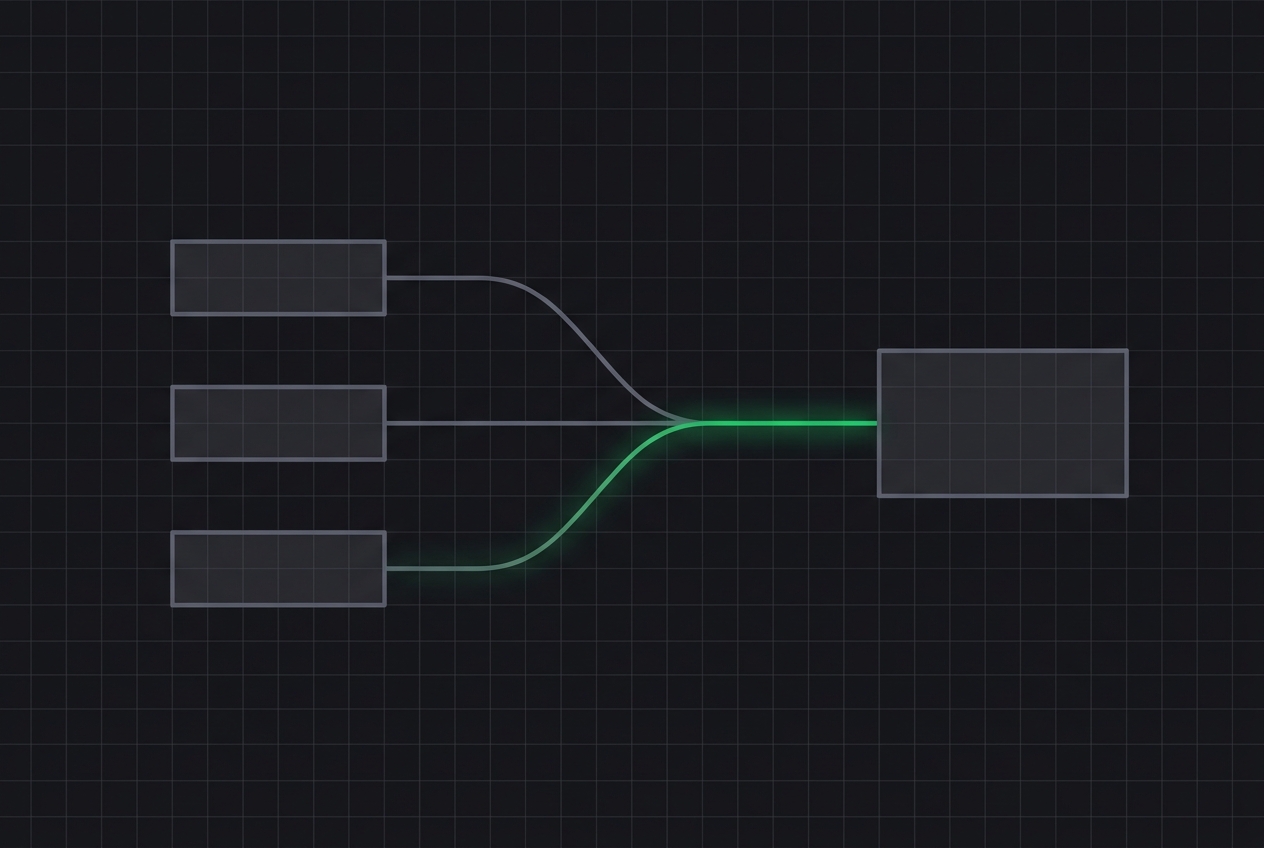
Calibration is the formal process where different evaluators review the same customer interaction to ensure scoring consistency. It acts as the sanity check for a quality program, preventing grader bias where an agent's score depends more on who reviewed the call than how the agent actually performed. By aligning the logic behind every checkmark, operations leaders ensure that QA data is a reliable reflection of reality rather than a collection of subjective opinions.
Key takeaways
- Eliminate Grader Bias: Calibration ensures that a 'hard grader' and a 'soft grader' arrive at the same score for the same behavior.
- Focus on the Logic, Not the Score: The value of the session is in discussing why a point was deducted, not just the final percentage.
- Include Multiple Perspectives: Effective sessions involve QA analysts, team leads, and occasionally high-performing agents to ensure the scorecard is practical.
- Measure Variance: Track the delta between individual scores and the group's 'gold standard' to identify where training is needed for evaluators.
Why calibration is the foundation of agent trust
When agents feel that their scores are arbitrary, they stop viewing QA as a coaching tool and start viewing it as a disciplinary hurdle. This friction often stems from a lack of calibration. If an agent receives a 90% from one supervisor but would have received a 75% from another for the exact same interaction, the system is fundamentally broken. This inconsistency is one reason why your QA scorecards feel like a trap to your agents.
Calibration sessions protect the integrity of the data used for performance reviews, bonuses, and promotions. According to research programs like Gartner's Customer Service & Support practice, the shift toward domain-specific AI and data-driven management requires a high degree of data accuracy. If the human-generated 'ground truth' data used to train agents or evaluate AI performance is inconsistent, the entire operational strategy rests on a shaky foundation.
The Pre-Meeting Workflow: Setting the Stage
A common mistake is trying to score the interaction during the meeting. This leads to groupthink, where the loudest voice in the room dictates the score. Instead, follow a structured pre-meeting process:
- Select the Interaction: Choose a call or chat that is complex or sits in a 'grey area' of your policy. Avoid the 'perfect' calls; they don't spark the necessary debate.
- Blind Scoring: Every participant—QA analysts, supervisors, and managers—must score the interaction independently before the meeting starts. They should use your standard ticketing or CCaaS platform, such as Zendesk or Salesforce Service Cloud, to log their results.
- Submit the Scores: A facilitator collects these scores to identify the variance. If everyone scored an 85, the session will be short. If scores range from 60 to 95, you have a critical alignment opportunity.
Running the Session: The 'Why' Over the 'What'
The facilitator should open the meeting by showing the range of scores without attributing them to specific people. This encourages honest discussion. The focus should not be on 'who is right,' but on how the scorecard definitions are being interpreted.
For example, if the scorecard asks if the agent 'demonstrated empathy,' one grader might require a specific phrase like 'I understand how frustrating that is,' while another might look for a tone of voice. This is where you refine your definitions. If the group cannot agree on what 'empathy' looks like, the scorecard item is too vague and needs to be updated. This process is a core component of how to build a modern contact center QA program.
Scaling Calibration with AI and Conversation Intelligence
As contact centers move away from 2% manual sampling toward full coverage, the role of calibration changes. When you use a conversation-intelligence layer like Hear.ai to analyze 100% of calls for compliance or sentiment, the human calibration session becomes the 'quality control' for the AI's logic.
In this modern setup, the team calibrates on whether the AI's automated tags correctly identified a 'resolved' issue or a 'frustrated' customer. This ensures that the automated insights provided by platforms like Five9 or NICE align with the brand's specific standards. The human session remains the final authority on nuance, while the technology handles the scale.
Measuring Success through Variance
To know if your calibration is working, you must track evaluator variance over time. This is a metric often highlighted by Metrigy in their CX and AI success-metrics studies.
Calculate the 'Gold Standard' score—the score the group agrees upon after the discussion. Then, measure how far each individual's original blind score was from that standard. If a specific supervisor consistently scores 10 points lower than the group, they need additional training on the scorecard. Over several months, the goal is to see the individual 'pre-scores' naturally gravitate toward the group standard before the meeting even begins.
FAQ
How often should we hold calibration sessions? Most high-performing centers hold calibration weekly or bi-weekly. If you are launching a new product, a new scorecard, or a new AI tool, you should increase the frequency to daily for the first week to ensure everyone is aligned on the new criteria.
Who should facilitate the meeting? Ideally, a neutral QA lead or an operations manager should facilitate. It is important that the facilitator does not 'take sides' but instead asks probing questions to help the group reach a consensus based on the documented scorecard definitions.
What do we do if we can't reach a consensus? If the group is split, the highest-ranking operations leader in the room makes the final call. However, a lack of consensus is a clear signal that the scorecard item or the training material is ambiguous. The immediate follow-up action should be to clarify the written policy to prevent future confusion.
Calibration is not a one-time project; it is the recurring heartbeat of a fair and data-driven contact center. Without it, your QA scores are just numbers; with it, they are a roadmap for improvement.
Explore our guide on scaling QA coverage beyond the 2% sampling trap to see how calibration fits into a high-volume environment.