
Fixing Broken QA Calibration: A Practical Ops Playbook
QA calibration sessions ensure score consistency across your team. Learn how to run effective meetings that align supervisors and improve agent trust in your data.
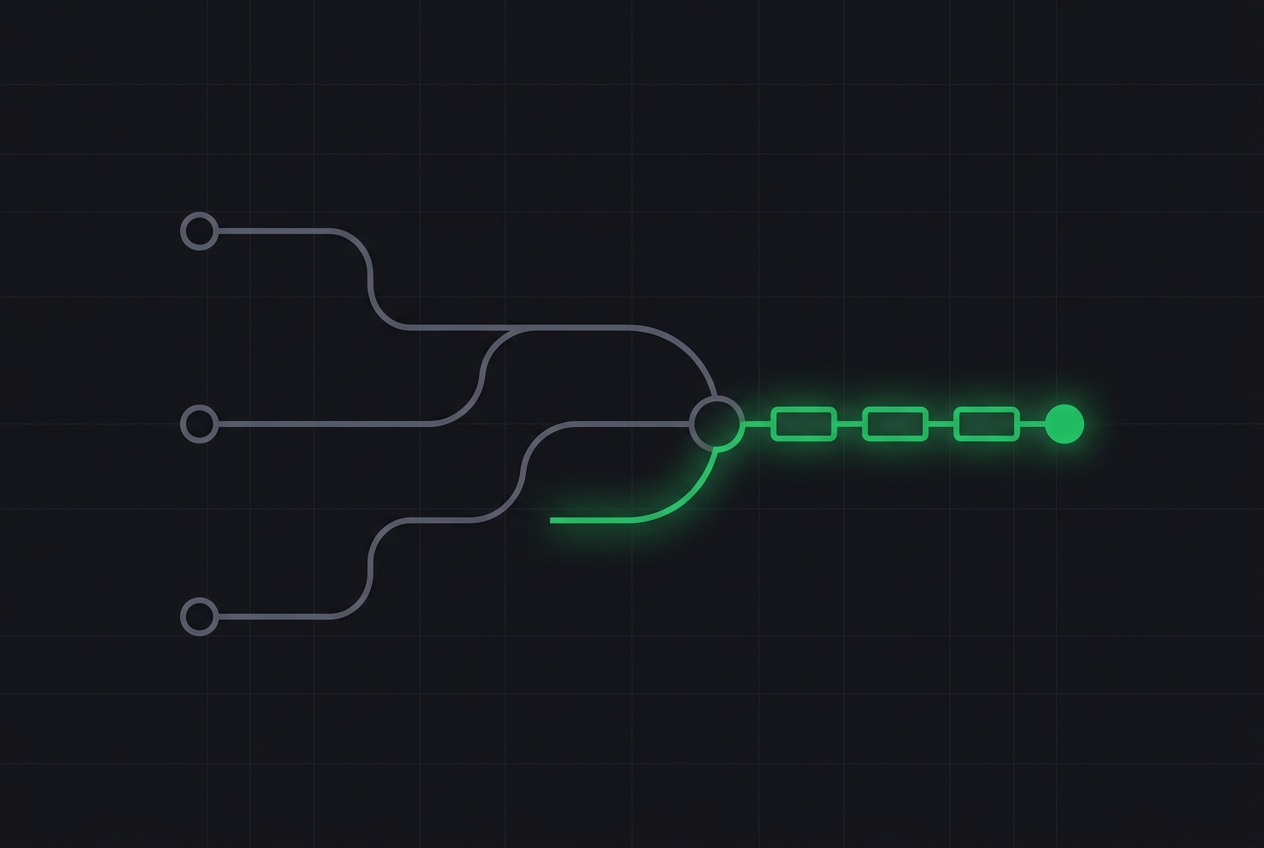
QA calibration is the structured process where multiple evaluators review the same customer interaction to ensure their scoring aligns with the organization’s standards. This ritual eliminates grader bias, ensuring that an agent’s performance score is a reflection of their work rather than which supervisor happened to pull the ticket. Without regular calibration, QA data becomes subjective, leading to agent resentment and unreliable operational insights.
Key takeaways
- Measure variance, not just the score: The goal is to narrow the gap between evaluators, not just to agree on a single number.
- Include agents in the process: Inviting high-performing agents to calibration sessions builds transparency and improves buy-in for the rubric.
- Use automated baselines: Conversation intelligence tools can provide a neutral starting point for human evaluators to debate.
- Document the 'Why': Every calibration session should result in an updated 'FAQ' or 'Examples' document to clarify ambiguous scorecard items.
What is the primary goal of a QA calibration session?
The primary goal of a calibration session is to achieve inter-rater reliability (IRR). This is a statistical measure of how much consensus exists among different evaluators. In a contact center, high IRR means that if three different supervisors score the same call from a platform like Zendesk or Salesforce Service Cloud, they should all arrive at a score within a narrow, predefined range (typically +/- 5%).
Calibration isn't about forced agreement; it is about uncovering the root cause of disagreement. If one supervisor marks a 'greeting' as failed because the agent didn't use the customer's name twice, while another marks it as passed because the tone was friendly, the problem isn't the supervisors—it is the lack of a clear definition in the rubric. Research from Gartner's Customer Service & Support practice suggests that as organizations move toward more complex, domain-specific AI interactions, the need for human-led calibration on 'soft skills' and 'intent' becomes even more critical.
How do you select the right interactions for calibration?
Selecting the right calls or chats is the difference between a productive session and a waste of time. Most teams fall into the trap of picking 'perfect' calls or 'disaster' calls. Neither provides much value for calibration because the scoring is usually obvious. Instead, ops leads should focus on the 'gray areas.'
- The Outliers: Identify interactions where the automated score (if using AI) differs significantly from the initial human score. Tools like Hear.ai can flag compliance risks or sentiment shifts that a human might interpret differently than a machine.
- The Near-Misses: Select calls that sit just below the 'passing' threshold. These are where subjective interpretation usually happens.
- New Rubric Items: If you have recently updated your scorecard, as discussed in our guide on how to design contact center QA scorecards agents won't hate, those new sections must be the focus of the next three calibration sessions.
- High-Stakes Escalations: Use interactions that resulted in a supervisor callback to ensure the 'failed' markers are consistent with the actual customer impact.
What metrics define a successful calibration program?
A successful program is measured by the narrowing of the 'variance gap.' If your team starts with a 15-point spread between the highest and lowest scores for the same call, your target should be to reduce that to a 5-point spread over a quarter.
According to Metrigy, contact centers that prioritize CX success metrics often find that calibration is the missing link between high QA scores and low CSAT. If your QA scores are 95% but your CSAT is 70%, your evaluators are likely 'calibrated' to the wrong things—scoring for compliance while the customer is looking for resolution.
Key metrics to track include:
- Inter-Rater Reliability (IRR) %: The frequency with which evaluators agree on a pass/fail or a specific score.
- Time to Consensus: How long the team spends debating a single rubric item. Long debates signal a need for better documentation.
- Appeal Rate: The percentage of QA scores challenged by agents. Effective calibration should naturally lower this number because the scoring becomes more predictable.
How does AI change the calibration workflow?
AI and conversation intelligence are shifting the role of the human evaluator from 'data entry' to 'data auditor.' When a team is moving from 2% to 100% QA coverage, it is impossible to calibrate every call. Instead, the calibration session becomes a check on the AI's logic.
In a modern workflow, a platform like Hear.ai might pre-score 10,000 calls. The calibration team then reviews a sample of 10 of those calls to see if the AI's 'Sentiment Analysis' or 'Compliance Flag' matches the human's professional judgment. If the AI is too strict on a specific compliance phrase, the ops lead adjusts the prompt or the logic. This 'calibrating the machine' approach ensures that the 100% coverage remains accurate and fair to the agents.
The Step-by-Step Calibration Session Agenda
To keep these meetings under 60 minutes and maintain tactical focus, follow this playbook:
- Pre-work (Individual): Send the interaction (audio or transcript) to all attendees 24 hours in advance. Everyone must score it independently in the CRM or QA tool without seeing each other's marks.
- The Reveal (5 mins): Display the scores side-by-side on a screen. Identify the outliers.
- The 'Why' (30 mins): Do not go line-by-line. Jump straight to the items with the highest variance. Ask the high-scorer and the low-scorer to explain their reasoning based on the current rubric.
- The Consensus (15 mins): The QA Lead or Ops Manager makes a final ruling on how that specific scenario should be scored moving forward.
- The Update (10 mins): Update the 'Master Scoring Guide.' If a specific phrase is now considered 'passing,' it must be documented so agents can see it.
FAQ
How often should we hold calibration sessions? Weekly for new teams or after a rubric change; bi-weekly or monthly for established teams with high inter-rater reliability. If you notice a spike in agent appeals, increase the frequency immediately.
Who should attend calibration meetings? At a minimum: The QA Lead and all Team Leads/Supervisors. Ideally, you should rotate in one or two 'top-tier' agents to provide a floor-level perspective and increase transparency.
What is an acceptable variance in scores? Most enterprise contact centers aim for a variance of +/- 5% on a 100-point scale. If the difference is consistently higher, the rubric is likely too subjective and needs more concrete 'Yes/No' criteria.
Should we calibrate on AI-scored calls? Yes. Calibrating the AI’s output is essential to ensure the automated system isn't hallucinating or missing nuance. This is often called 'Human-in-the-loop' (HITL) QA.
Calibration is the only way to turn QA from a 'policing' function into a reliable data source for the business. When everyone agrees on what 'good' looks like, the data becomes actionable.
Explore our playbook on moving from 2% to 100% QA coverage to see how calibration fits into a scaled operation.