
Building a modern contact center QA program: A full playbook
Learn how to build a modern contact center QA program that moves from manual sampling to 100% coverage using automated scorecards and conversation intelligence.
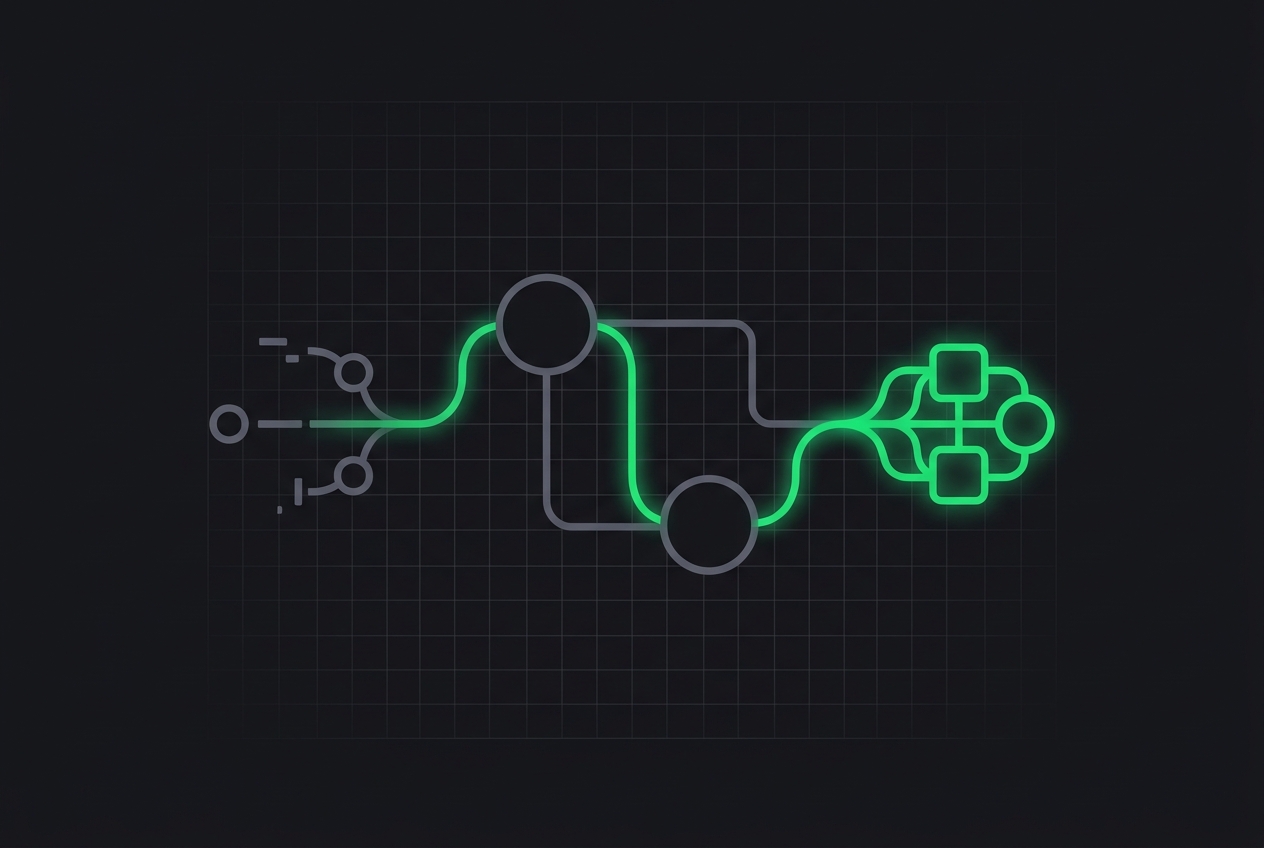
Modern contact center quality assurance (QA) is the operational transition from manual, random sampling of 1-2% of calls to automated, 100% coverage analysis using conversation intelligence. This approach works by integrating AI-driven scoring with existing CCaaS platforms to identify behavioral trends, compliance risks, and sentiment across every customer interaction. By automating the identification of specific keywords and sentiment markers, QA teams can shift their focus from finding errors to executing high-impact coaching.
Key takeaways
- Shift from sampling to total coverage: Manual auditing misses the vast majority of customer interactions; modern programs use AI to analyze every transcript.
- Outcome-based scorecards: Move beyond binary checklists (e.g., "Did they say the greeting?") to behavioral metrics that correlate with customer satisfaction.
- Integration is the backbone: A successful QA program requires a tight loop between the telephony layer, the CRM, and the conversation intelligence layer.
- Coaching as the primary KPI: The goal of modern QA is not a higher score, but a measurable improvement in agent behavior over time.
Why is the manual QA model failing?
The traditional manual QA model is a statistical bottleneck. When a supervisor audits only three to five calls per agent per month, the data is too thin to be actionable. This small sample size often leads to "recency bias," where an agent is judged on their latest mistake rather than their overall performance trend. Furthermore, manual auditing is slow, often providing feedback days or weeks after the interaction occurred, which diminishes the effectiveness of coaching.
According to the Gartner Customer Service & Support practice, the focus for 2026 is increasingly on domain-specific AI and data protection. This suggests that the next generation of QA will not just be about general transcription, but about understanding the specific context of a business’s unique customer journeys. Without 100% coverage, managers are essentially operating in the dark, unable to spot systemic issues before they impact the omnichannel-strategy.html.
Step 1: Rebuilding the scorecard for outcomes
A modern QA program starts with the scorecard. Traditional scorecards are often overloaded with compliance checkboxes that do not actually drive customer satisfaction. To build a better scorecard, categorize your metrics into three buckets:
- Compliance and Protocol: These are non-negotiable items like ID verification and mandatory disclosures. These are the easiest to automate.
- Soft Skills and Sentiment: This measures empathy, active listening, and tone. While harder to quantify manually, conversation intelligence tools can now flag negative sentiment shifts in real-time.
- Problem Resolution: This tracks whether the agent actually solved the customer's issue.
Instead of a simple "Yes/No" for a greeting, use a weighted scale that prioritizes "Effective Discovery" or "Resolution Confirmation." This aligns the QA process with broader business goals, such as those tracked by the Forrester Customer Experience Index, which measures how customers rate their experiences across brands.
Step 2: Connecting the tech stack
You cannot achieve 100% coverage with spreadsheets. The modern QA stack requires three layers working in tandem:
- The Telephony/CCaaS Layer: Platforms like Genesys or Five9 capture the raw audio and metadata.
- The CRM Layer: Salesforce Service Cloud or Zendesk provides the customer context and ticket history.
- The Intelligence Layer: This is where conversation intelligence tools like Hear.ai come in. These tools ingest the audio from the CCaaS, transcribe it, and apply your digital scorecards across every single call.
By pairing a CCaaS platform with a conversation-intelligence layer, you remove the manual labor of searching for specific call types. For example, instead of a manager hunting for "angry customers," the system automatically flags calls with high sentiment volatility for immediate review. This ensures that compliance-monitoring.html happens in the background, allowing the QA team to focus on nuanced analysis.
Step 3: Moving from "Gotcha" to "Growth"
The most common mistake in QA is using the scorecard as a disciplinary tool. This creates a culture of fear that actually hinders performance. In a modern program, the QA data should be the foundation for a collaborative coaching culture.
When you have data from 100% of calls, you can show an agent their own data trends. Instead of saying, "You missed a disclosure on this one call," you can say, "You are hitting your disclosures 98% of the time, but we’ve noticed your average handle time increases when you hit this specific technical topic. Let’s work on that knowledge gap."
This data-driven approach improves agent-retention-tactics.html because agents feel the evaluation process is fair and comprehensive, not arbitrary. Managers should use the time saved by automated scoring to conduct 1-on-1 coaching sessions that focus on role-playing and complex problem-solving rather than just reviewing transcripts.
Step 4: Measuring the ROI of QA
To justify the investment in modern QA tools, you must link QA scores to business outcomes. A high QA score is meaningless if it doesn't correlate with a decrease in repeat contacts or an increase in Net Promoter Score (NPS).
Research programs like the IDC MarketScape often highlight how technology spend in the contact center is shifting toward tools that provide a clear view of the "Future of Customer Experience." By tracking the correlation between automated QA scores and First Call Resolution (FCR), you can demonstrate the direct impact of the QA program on the bottom line. If a specific coaching intervention leads to a measurable drop in call volume for a certain issue, that is a clear win for the QA department.
FAQ
How accurate is AI-driven QA scoring compared to a human auditor? AI-driven scoring is highly consistent and eliminates the subjectivity that often plagues human auditors. While it may miss subtle sarcasm or hyper-local slang, it excels at identifying compliance markers, keywords, and broad sentiment trends across thousands of calls simultaneously.
Will agents push back against 100% monitoring? Resistance usually occurs when monitoring is used solely for punishment. When positioned as a tool for fair evaluation and personalized coaching, most agents prefer total coverage because it ensures their high-performance moments are captured, not just their mistakes.
Can we implement automated QA if we use a legacy on-premise phone system? It is more difficult but possible. Most modern conversation intelligence tools prefer cloud-based CCaaS integrations (like Talkdesk or 8x8), but many can also ingest call recordings via API or SFTP from legacy systems to provide post-call analysis.
Building a modern QA program is an iterative process that requires aligning your technology, your scorecards, and your coaching culture. To see how automated analysis can transform your team's performance, explore our guide on coaching-frameworks.html.