
Building a Modern Contact Center QA Program: A Full Playbook
Learn how to build a modern contact center QA program that moves beyond random sampling to 100% coverage, actionable scorecards, and data-driven coaching.
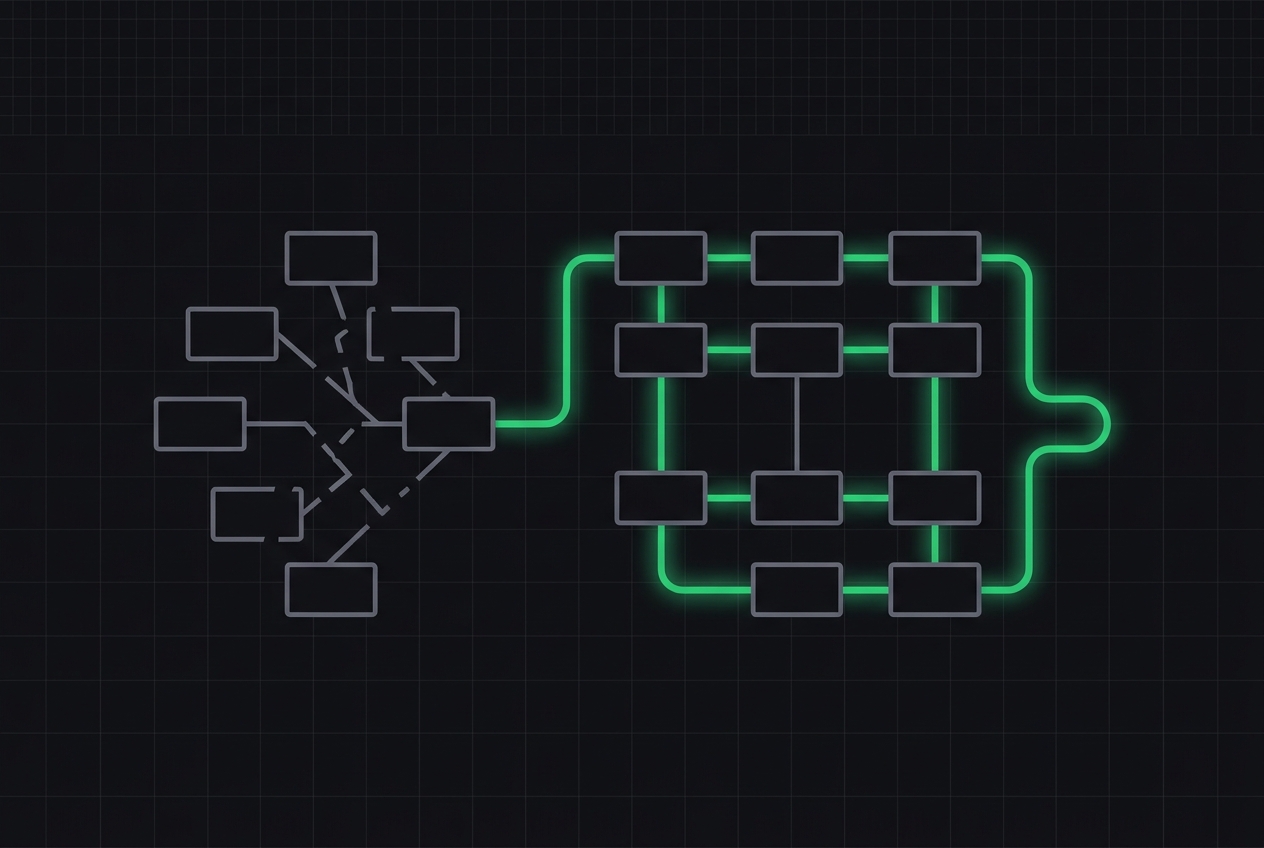
A modern contact center Quality Assurance (QA) program is the transition from manual, reactive sampling to automated, proactive conversation intelligence. Instead of reviewing a random 1-2% of calls, modern programs use technology to analyze 100% of interactions, identifying specific behavioral patterns and compliance risks across the entire floor. This shift allows operations leads to move from being a "policing" function to a strategic engine for agent development and customer experience improvement.
Key Takeaways
- Shift from sampling to census: Move from 2% manual reviews to 100% automated coverage to eliminate bias and find rare but high-impact issues.
- Focus on outcome-based scorecards: Prioritize customer sentiment and problem resolution over rigid script adherence.
- Close the coaching loop: Use QA data to trigger immediate, personalized coaching sessions rather than monthly generic reviews.
- Integrate conversation intelligence: Pair standard CCaaS platforms with specialized analysis layers to automate the heavy lifting of data collection.
The Failure of the 2% Sample
For decades, the industry standard for QA has been the random sample. A supervisor or QA specialist listens to three to five calls per agent per month and fills out a scorecard. This approach is fundamentally flawed for two reasons: statistical insignificance and inherent bias.
When you only hear 2% of calls, you miss the outliers—the extreme successes and the critical failures. An agent might be excellent 98% of the time, but the QA manager happens to pull the one call where they were frustrated. Conversely, a struggling agent might get lucky with five simple calls, leading to a false sense of performance security.
Gartner’s Hype Cycle for Customer Service and Support maps the maturity of these technologies, noting that domain-specific AI is now essential for moving beyond these manual limitations. By analyzing every interaction, operations leads get a true baseline of performance. This "census-level" data allows you to see if a specific product issue is spiking across the entire center or if a new training module has actually changed agent behavior on the floor.
Architecture of a Modern Scorecard
Modern scorecards have moved away from binary "Yes/No" checkboxes for script compliance. In a world where customers value efficiency and empathy, a rigid script can actually hurt the experience.
1. Behavioral Markers vs. Script Compliance
Instead of asking "Did the agent say the exact greeting?", ask "Did the agent establish rapport?" or "Did the agent acknowledge the customer's frustration?". This allows for natural conversation while still maintaining quality standards.
2. Outcome-Based Metrics
The most effective scorecards weigh the outcome of the call heavily. Did the customer have to call back? Was the issue resolved on the first attempt? Programs often cross-reference QA scores with external data, such as Forrester’s CX Index, which tracks how customers rate their experiences. If an agent gets a 100% QA score but the customer gives a 1-star rating, your scorecard is measuring the wrong things.
3. Sentiment Analysis
Automated tools can now tag calls for sentiment—detecting when a customer moves from "frustrated" to "satisfied" during a call. Including sentiment shift as a scorecard item provides a more nuanced view of an agent's soft skills than manual listening ever could.
The Tech Stack: From CCaaS to Intelligence
Building a modern QA program requires a layered technology approach. You cannot rely on a single tool to do everything; instead, you need an integrated stack where data flows freely.
- The Foundation (CCaaS): Platforms like Five9, Genesys, or Talkdesk handle the routing and recording of calls. These are the "pipes" of your operation.
- The CRM: Salesforce Service Cloud or Zendesk provides the context. QA scores should be visible within the CRM so that when a manager looks at a customer record, they see the quality of the interactions associated with it.
- The Intelligence Layer: This is where the actual analysis happens. Teams often pair their CCaaS platform with a conversation intelligence layer such as Hear.ai (powers our network). This layer analyzes the audio or text of 100% of conversations, flagging compliance risks and identifying coaching opportunities that a human would miss. For example, while a CCaaS might record the call, a tool like Hear.ai provides the automated QA coverage that allows you to score every single interaction without increasing headcount.
- The Infrastructure: For organizations building custom models, Google Cloud AI or AWS provides the underlying speech-to-text and natural language processing capabilities.
Operationalizing QA: The Coaching Loop
Data without action is just overhead. The most successful QA programs use their findings to drive a continuous coaching loop. In the old model, coaching happened once a month. In the modern model, it happens in near real-time.
When an automated system flags a call with high negative sentiment or a compliance breach, the supervisor should receive an alert immediately. This allows for "micro-coaching"—a five-minute huddle while the call is still fresh in the agent's mind.
To make this work, you must move away from a "punitive" QA culture. If agents feel that QA is a trap, they will resist the data. Instead, frame the 100% coverage as a way to protect them. It ensures that their best work is recognized and that they aren't judged solely on a few random calls. For more on this, see our guide on creating an agent coaching playbook.
Compliance and Risk Management
Beyond performance, QA is a critical line of defense for compliance. In industries like finance or healthcare, a single missed disclosure can lead to significant fines. Manual QA is a poor tool for compliance because the risk is often in the calls you don't listen to.
A modern program uses automated keyword and phrase detection to ensure every required disclosure is made. If a tool like Hear.ai identifies a missing disclosure, it can trigger an automated workflow to rectify the situation before it becomes a legal issue. This shift from "detecting" a mistake weeks later to "preventing" a risk in real-time is the hallmark of an advanced operations strategy.
FAQ
How accurate is automated QA compared to human reviewers? Modern speech-to-text and NLP models have reached a point where they can match or exceed human accuracy for objective tasks like script compliance or identifying specific keywords. However, humans are still better at understanding complex emotional nuances and sarcasm, which is why the best programs use AI to filter the 100% and humans to review the most complex 5%.
How do we handle agent pushback when moving to 100% coverage? Transparency is key. Show agents how the system works and emphasize that 100% coverage means their "wins" are finally being seen. When agents realize that their average performance is being measured fairly rather than through a random sample, pushback typically decreases.
What is the first step in transitioning to this model? Start by auditing your current scorecard. Remove any metrics that don't correlate with customer satisfaction or resolution. Once you have a lean, outcome-focused scorecard, look for a conversation intelligence partner that integrates with your existing CCaaS to begin the automation process.
Building a modern QA program is an iterative process that requires aligning your tech stack with your human coaching efforts. For more on managing the transition to AI-assisted operations, read our deep dive on auditing AI agents.