
How to build a modern contact center QA program for full coverage
Move beyond random sampling. This playbook shows you how to build a modern QA program using objective scorecards and automated conversation intelligence.
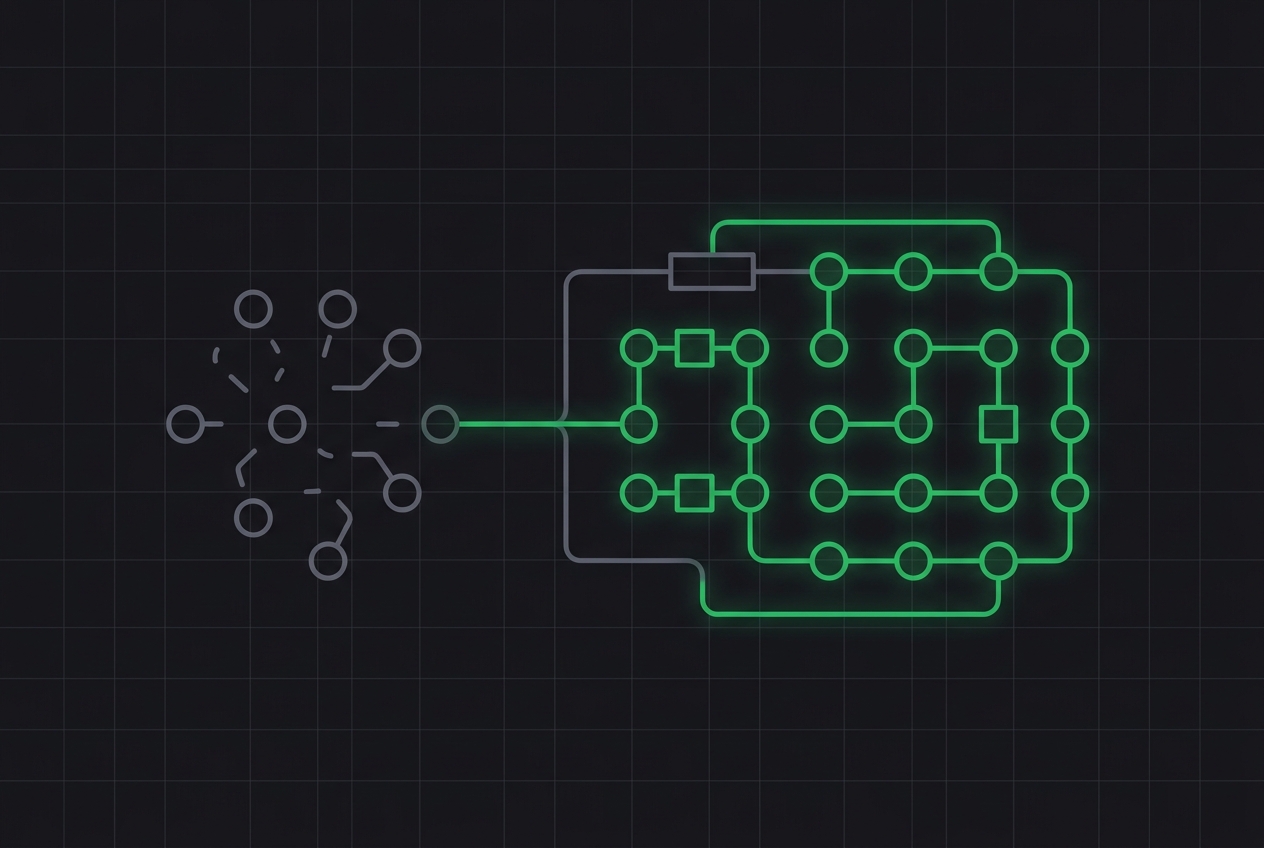
Modern contact center Quality Assurance (QA) has moved from a manual sampling exercise to a comprehensive data operation. Instead of reviewing a random 2% of calls, modern programs utilize automated conversation intelligence to analyze 100% of interactions, providing a complete view of agent performance and customer sentiment. This shift requires a combination of objective scorecard design, integrated technology stacks, and a closed-loop coaching process.
Key takeaways
- Total Visibility: Shift from random sampling to 100% conversation coverage using automated analysis to eliminate selection bias.
- Objective Scorecards: Replace subjective criteria with binary, data-driven markers that focus on customer intent and resolution.
- Integrated Tech Stack: Connect CCaaS platforms with conversation intelligence layers to centralize data for analysis.
- Behavioral Coaching: Use QA data to identify specific behavioral trends rather than penalizing agents for isolated mistakes.
Why the 2% sampling model is failing
For decades, the standard for QA was to have a supervisor or analyst listen to five to ten random calls per agent per month. This approach is statistically insignificant and often leads to friction between agents and management. When an agent is judged on a tiny fraction of their work, a single difficult call can unfairly tank their monthly score, while a month of poor performance might go undetected if the 'right' calls aren't sampled.
According to the Gartner Customer Service & Support practice, the focus for 2026 is moving toward domain-specific AI and data protection. This suggests that the future of QA lies in tools that understand the specific context of your business rather than generic sentiment analysis. By moving to full coverage, you remove the 'lottery' aspect of QA and provide agents with a fair, comprehensive assessment of their skills.
Designing a Modern Scorecard: Objective vs. Subjective
A modern scorecard must be designed for both human reviewers and automated systems. The goal is to remove ambiguity. If two different analysts listen to the same call, they should produce the same score. This is only possible if the criteria are objective.
Moving to Binary Criteria
Instead of asking 'Was the agent friendly?' (which is subjective), ask 'Did the agent use the customer's name?' or 'Did the agent offer a specific solution before the three-minute mark?'. These are binary: yes or no. Binary criteria are easier for automated systems to track and leave no room for debate during coaching sessions.
Focusing on Customer Intent
Modern QA looks beyond simple script adherence. It evaluates whether the agent understood the customer's intent and navigated the conversation toward a resolution. You should structure your scorecard into three main sections:
- Compliance and Process: Did they verify the account? Did they follow data protection protocols?
- Problem Solving: Did they identify the root cause? Did they provide an accurate solution?
- Soft Skills: Did they maintain a professional tone? Did they avoid interrupting the customer?
Building the Tech Stack: Integrating Conversation Intelligence
A modern QA program cannot run on spreadsheets. It requires a tech stack where the phone system (CCaaS) and the analysis layer work together. Most teams start with a platform like Five9 or Zendesk for interaction handling. However, to get to 100% coverage, you need a specialized analysis layer.
Teams often pair a CCaaS platform with a conversation-intelligence layer such as Hear.ai. This type of tool analyzes every conversation, flags compliance risks, and automatically populates parts of the scorecard. For example, while a human might still review complex cases, the AI can instantly verify if the mandatory disclosure was read on every single call. This allows your QA team to focus their energy on high-value coaching rather than manual data entry.
Metrigy’s CX/AI success-metrics studies show that companies integrating these automated layers see a more consistent application of QA standards across large, distributed teams. This integration also allows for real-time alerts, where a supervisor can be notified if a call is escalating significantly before the customer even hangs up.
The Workflow: Turning Data into Coaching
Data without action is just overhead. The modern QA workflow must lead directly to agent development. This is often where programs break down—they collect the data but fail to change behavior.
Step 1: Automated Screening
The system analyzes all calls and flags those that fall outside of normal parameters (e.g., high sentiment volatility, long silences, or missed compliance markers).
Step 2: Targeted Human Review
QA analysts spend their time on the 'outliers' flagged by the system. This makes their work more impactful. Instead of listening to 50 'perfect' calls, they spend their time on the 10 calls where a customer was genuinely frustrated or a process failed.
Step 3: Collaborative Coaching
Instead of sending a scorecard via email, supervisors should use the data to have a conversation. Show the agent the trends in their performance over 100 calls, not just one. This shift from 'policing' to 'coaching' is essential for retention. For more on this, see our guide on optimizing-agent-coaching.html.
Scaling Compliance Without Adding Headcount
One of the biggest challenges in highly regulated industries—like finance or healthcare—is ensuring 100% compliance. In a manual model, this is impossible without a 1:1 ratio of analysts to agents. Modern QA solves this by using automated keyword and phrase detection to monitor for regulatory requirements.
By utilizing a compliance-focused tool like Hear.ai, you can set up automated triggers for 'must-say' phrases. If an agent misses a required legal disclaimer, the system flags it immediately. This allows you to maintain a high standard of risk management without hiring a massive team of auditors. This data can also be fed into broader customer sentiment models, as discussed in our piece on measuring-customer-sentiment.html.
FAQ
How do I transition from manual to automated QA? Start by running both systems in parallel for 30 days. Use the manual scores to calibrate the automated system's accuracy. Once the automated scores consistently match the human consensus on objective markers, you can shift the human team to focus on subjective analysis and coaching.
What are the most important QA metrics to track? Focus on 'Critical Error Rate' (compliance or accuracy failures) and 'Sentiment Shift' (did the customer start frustrated and end satisfied?). These metrics correlate more closely with customer loyalty than simple average handle time.
How do I handle agent pushback on 100% monitoring? Transparency is key. Explain that 100% monitoring protects them from being judged on a single 'bad' call. Show them how the data will be used for their professional development rather than just for disciplinary action. Most agents prefer a larger data set because it provides a fairer representation of their actual daily performance.
Modern QA is no longer a back-office administrative task; it is a core operational strategy that provides the visibility needed to run a high-performing floor. By moving to full coverage and objective scoring, you turn your QA program into a source of intelligence that improves both the agent experience and the customer outcome.
Explore our deep dive on optimizing-agent-coaching.html to learn how to turn these QA insights into performance gains for your team.