
How to deploy agent assist without drowning agents in noise
Learn how to scale Generative AI agent assist by focusing on cognitive load reduction, prompt governance, and integrating real-time feedback into your QA workflow.
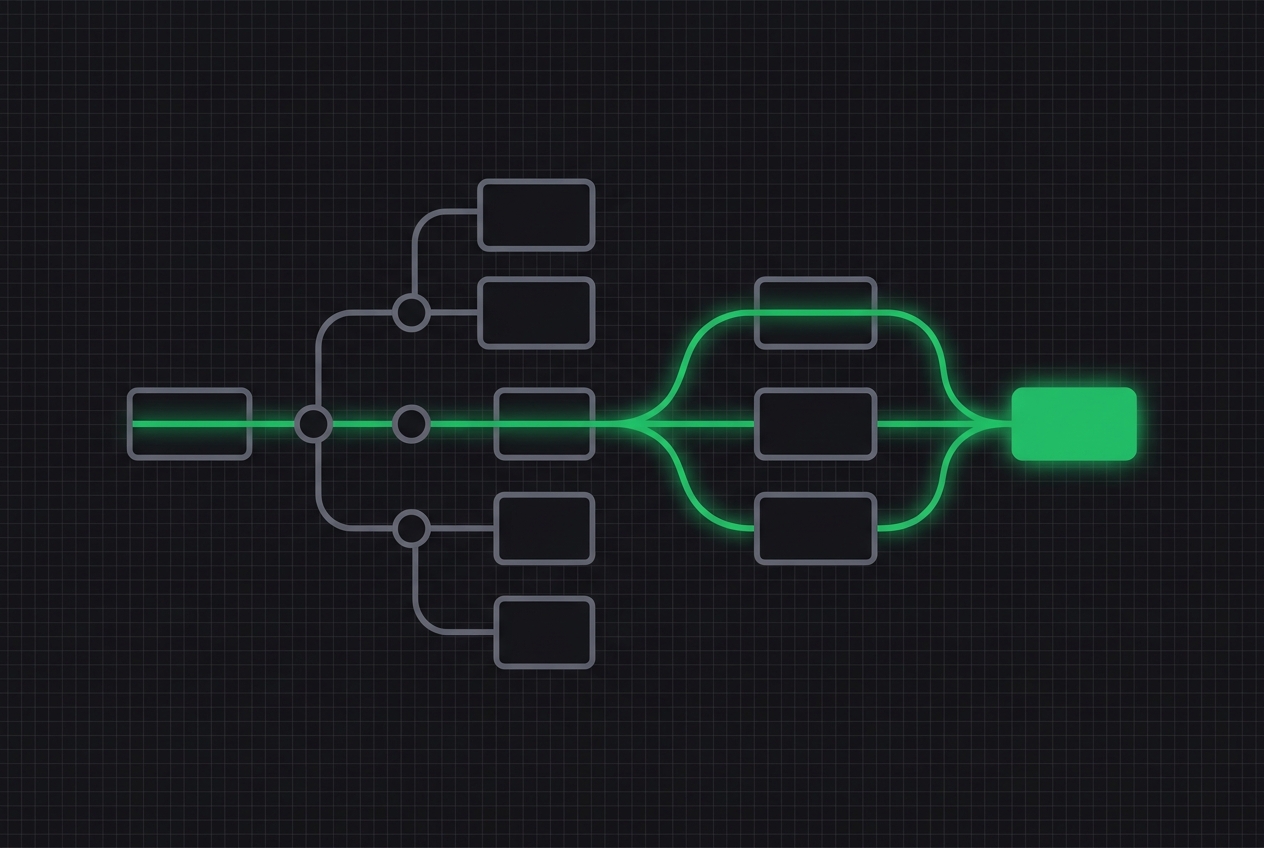
Generative AI agent assist tools succeed when they prioritize context over volume, delivering real-time suggestions that reduce cognitive load rather than adding to it. Scaling these tools requires a rigorous feedback loop where operations leads treat LLM prompts as living documents, constantly refined by agent performance data and QA insights. Success is measured not by the presence of AI, but by the reduction in time-to-competency and the accuracy of the information provided to the customer.
Key takeaways
- Prioritize task-specific prompts: Avoid generic "help me" bots; instead, deploy narrow prompts for specific workflows like billing disputes or technical troubleshooting.
- Establish a desktop feedback loop: Implement a simple "helpful/not helpful" mechanism within the agent interface to identify where the AI is providing irrelevant or incorrect advice.
- Audit the assist, not just the agent: Use conversation intelligence to determine if an agent followed a poor AI suggestion, shifting the focus of coaching from agent error to system optimization.
- Connect assist logs to QA: Ensure your QA team can see exactly what the AI suggested during the call to differentiate between agent performance and tool failure.
Why most agent assist deployments fail to scale
The primary barrier to scaling agent assist is cognitive overload. When a contact center introduces a Large Language Model (LLM) that generates full-paragraph suggestions in real-time, agents often stop reading them because the effort to parse the text exceeds the effort to solve the problem manually. This leads to a "noise" problem where the tool becomes a distraction rather than an asset.
According to Gartner’s Customer Service & Support practice, the focus for 2026 is shifting toward domain-specific AI and data protection. This means moving away from general-purpose assistants and toward tools that understand the specific nuances of your product and your customers' history. If your agent assist tool is pulling from a messy, outdated knowledge base, it will simply hallucinate incorrect answers faster than a human could.
Phase 1: Knowledge hygiene and grounding
Before deploying an assist tool from a provider like Salesforce Service Cloud or Zendesk, you must audit the source material. Generative AI uses a process called Retrieval-Augmented Generation (RAG) to find information in your knowledge base and summarize it. If your articles are contradictory or use jargon the LLM doesn't recognize, the output will be flawed.
- De-duplicate articles: Remove multiple versions of the same policy.
- Standardize formatting: Use clear headings and bullet points that LLMs can easily parse.
- Tag by intent: Map your knowledge base articles to specific customer intents identified in your routing software, such as Genesys or Five9.
Phase 2: Designing the "Next Best Action" (NBA) UI
To prevent noise, the UI should only surface information when the AI has a high confidence score. Instead of a scrolling chat window, consider a "card" system that appears only when specific keywords or intents are detected.
For example, if a customer mentions "canceling my subscription," the assist tool should surface a card with the current retention offer and the specific steps to process the request. This reduces the agent's need to search, which is a major driver of Average Handle Time (AHT).
Phase 3: The Feedback Loop (The Golden Record)
You cannot scale what you do not measure. Most teams measure the success of agent assist by looking at overall AHT or CSAT, but these are lagging indicators. To truly tune the system, you need a direct feedback loop from the agents.
When an agent receives a suggestion, they should have a one-click option to mark it as "Correct," "Inaccurate," or "Irrelevant." This data should be reviewed weekly by the Ops team. If a specific prompt is consistently marked as irrelevant, it suggests the trigger logic is too broad. If it is marked as inaccurate, the underlying knowledge base article needs an update.
This level of scrutiny is similar to the operational reality of moving from sampling to 100% QA review. Just as you need full visibility into agent performance, you need full visibility into AI performance to ensure the tool isn't introducing compliance risks.
Phase 4: Integrating Assist with QA
A common friction point occurs when an agent follows an AI suggestion that turns out to be wrong, and then gets marked down by a QA analyst. This destroys agent trust in the tool.
To prevent this, your QA workflow must include the "assist transcript." Platforms like Hear.ai can analyze customer conversations and flag where the AI intervention occurred. By pairing a CCaaS platform with a conversation-intelligence layer like Hear.ai, QA leads can see if an agent deviated from the script because the AI gave them a better path, or if they were led astray by a hallucination.
When you build a modern contact center QA program for full coverage, you must account for these automated inputs. The QA scorecard should have a specific section for "Tool Utilization" that evaluates whether the agent used the assist tool correctly and whether the tool provided the necessary support.
Managing the transition: The human-in-the-loop
As you scale, the role of the supervisor changes. Instead of monitoring calls for basic adherence, they become "prompt tuners." They identify patterns where the AI is struggling and work with the technical team to refine the system.
Forrester’s CX Predictions often highlight that the human element remains the safety net for AI-driven experiences. In a contact center, this means ensuring that agents feel empowered to override the AI. If the tool suggests a refund that violates policy, the agent must know they won't be penalized for ignoring the suggestion, provided they flag the error.
FAQ
How do we prevent AI hallucinations in agent assist? Hallucinations are minimized by using RAG (Retrieval-Augmented Generation) to limit the AI's response to your specific knowledge base. Additionally, setting a high "temperature" or confidence threshold ensures the tool only provides answers when it is certain of the source material.
Will agent assist replace the need for training? No. It shifts training from rote memorization of policies to critical thinking and navigation. Agents still need to understand the "why" behind a policy so they can validate the AI's suggestions and handle edge cases where the tool may lack context.
How do we measure the ROI of agent assist? Focus on three metrics: Reduction in "search time" (the gap between a customer question and the agent's start of an answer), improvement in First Contact Resolution (FCR) for complex queries, and the ramp time for new hires. If new agents reach proficiency faster with the tool, the ROI is significant.
Should agents be allowed to copy-paste AI responses into chat? Only if the AI is specifically tuned for your brand voice. It is generally better to have the AI provide the facts and have the agent provide the empathy and delivery. This maintains a human connection while ensuring technical accuracy.
To learn more about optimizing your floor for high-volume automation, see our guide on the operational reality of moving from sampling to 100% QA review.