
Cleaning Your Knowledge Base for AI: A 2025 CX Ops Guide
Learn how to audit, structure, and modularize your knowledge base to power AI tools. This guide provides a tactical roadmap for AI-ready knowledge management.
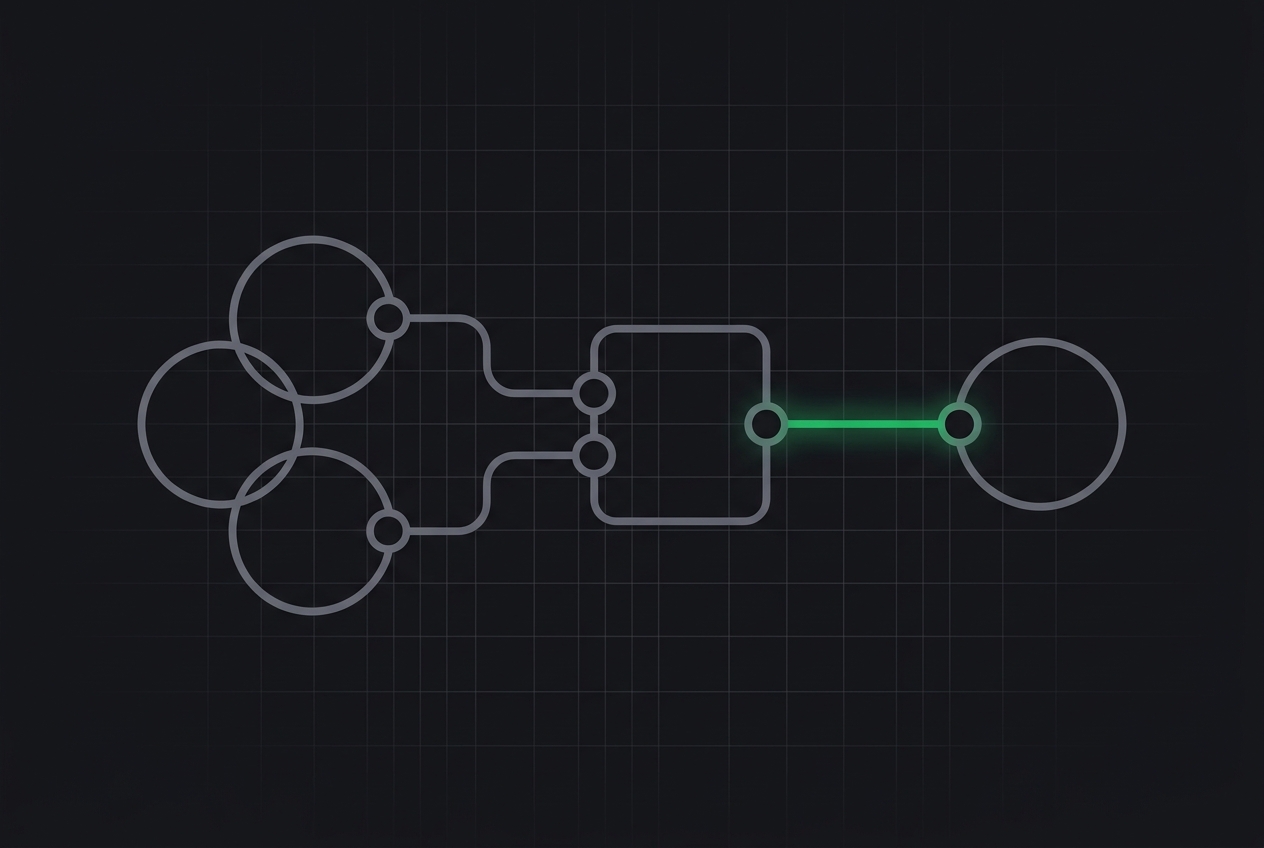
Knowledge management for AI is the process of auditing, cleaning, and structuring organizational documentation so Large Language Models (LLMs) can accurately retrieve and summarize information. To make a knowledge base AI-ready, operators must transition from long-form, narrative articles to modular, intent-based content blocks. This ensures that AI retrieval systems pull only the most relevant, up-to-date instructions without the noise of legacy data.
Key takeaways
- Garbage In, Garbage Out: AI reliability is directly tethered to the cleanliness and structure of your source documentation.
- Atomic Content: Information must be broken into small, self-contained "chunks" to prevent AI context drift and hallucinations.
- De-noising the KB: Identifying and deleting contradictory or outdated articles is more important than adding new ones.
- The Feedback Loop: Continuous optimization requires a tight link between AI performance data and the content team.
Why does your current knowledge base fail AI models?
Most legacy knowledge bases were built for human eyes, not machine ingestion. Humans are good at skipping over irrelevant context, ignoring outdated disclaimers, and synthesizing information from multiple paragraphs. AI models using Retrieval-Augmented Generation (RAG) are different; they convert your articles into mathematical vectors to find matches. If an article contains contradictory instructions or excessive filler, the AI may retrieve the wrong "chunk" or blend two conflicting steps into a single, incorrect answer.
To power tools like Generative AI Agent Assist: 2025 Scaling Guide for CX Ops, the underlying data must be "clean." Noise—such as "In the past, we used to..." or "Note: this policy changed in 2022"—confuses the model. For an AI to be effective, every sentence in your knowledge base must serve a current, functional purpose.
How do you audit a knowledge base for AI readiness?
An AI-ready audit is not a simple spell-check; it is a structural overhaul. Start by exporting your entire library and categorizing every article into three buckets: Keep, Kill, or Consolidate.
1. The Kill List: Delete any article that has not been viewed by an agent or a customer in the last six months, unless it covers a rare but critical compliance issue. Removing these reduces the "search space" for your AI, making it faster and more accurate.
2. The Consolidate List: Look for articles that cover the same topic with slight variations. If you have three different articles for "Refund Policy - US," "Refund Policy - Canada," and "Refund Policy - UK," an AI might struggle to pick the right one. Consolidate these into a single, structured article with clear headers for each region.
3. The Keep List: These are your high-volume, high-accuracy articles. These will be the first candidates for "chunking," a process where you break the text into modular units.
What is the "Atomic Content" strategy for CX?
Atomic content refers to breaking information down into its smallest possible functional unit. Instead of one 2,000-word article about "Shipping and Logistics," you create ten 200-word modules: "How to Track a Package," "Lost Package Policy," "International Customs Fees," etc.
Each module should follow a strict structure:
- Clear Intent: The title should match exactly what a user asks (e.g., "Reset my password").
- Prerequisites: List what is needed before starting (e.g., "You need your account number").
- Actionable Steps: Use numbered lists for instructions. Avoid flowery language.
- Single Source of Truth: Never repeat the same policy in two different places. If the policy changes, you only want to update it once.
By modularizing content, you allow the AI to retrieve only the specific "atom" of information needed for a query, which significantly improves the accuracy of AI-Augmented Training: Shrinking Agent Ramp Time for 2026.
Who should own Knowledge Management in an AI world?
The traditional role of a technical writer is evolving into a "Knowledge Architect." This person does not just write; they manage the data hierarchy. In a modern contact center, the Knowledge Architect works closely with the WFM and QA leads to identify where the AI is failing.
If the QA team finds that agents are giving incorrect info about a new promotion, the Knowledge Architect doesn't just fix the article—they analyze why the AI didn't find it. Was the header too vague? Was there a conflicting old article? According to documentation standards from the Nielsen Norman Group, findability is the most critical metric for any information system, and this is doubly true for machine-read data.
How do you measure the impact of KM on AI performance?
You cannot manage what you do not measure. To track the success of your knowledge cleanup, monitor the following metrics:
- AI Resolution Rate: The percentage of queries the AI handles without human intervention.
- Citation Accuracy: In Agent Assist tools, how often do agents click the "This was helpful" button on a retrieved article?
- Hallucination Rate: How often does the AI provide an answer that does not exist in the knowledge base?
If your AI resolution rate is low despite having the information in your KB, the problem is likely structural. The AI can see the data, but it cannot distinguish it from the surrounding noise. Platforms like Zendesk and Salesforce now offer tools to help identify "content gaps" where customers are searching for terms that don't exist in your library.
FAQ
How often should we audit our knowledge base for AI? A full structural audit should happen annually, but high-volume articles (the top 20% of your content) should be reviewed quarterly. AI models are sensitive to drift, so any major policy change must be updated in the KB immediately to prevent the AI from hallucinating old rules.
Do we need to rewrite every article for the AI? No, you should prioritize based on volume. Start with the articles that resolve the top 50% of your ticket volume. For low-volume or evergreen content, a simple header cleanup and the removal of outdated dates or names is often sufficient.
Can AI write the knowledge base articles for us? AI can draft content based on call transcripts or chat logs, but a human "Knowledge Architect" must always verify the accuracy and structure. Using AI to write for AI without human oversight often leads to circular errors and a degradation of the data quality over time.
What is the best format for AI to read? Clean HTML or Markdown is generally better than PDFs or spreadsheets. LLMs struggle with the layout of complex tables and the non-linear structure of some PDFs. Simple, hierarchical text with clear H2 and H3 tags is the most reliable format for RAG systems.
Building an AI-ready knowledge base is the single most important step in modernizing your CX operations. Without a structured data foundation, even the most expensive AI tools will fail to deliver consistent results. Focus on the data first, and the technology will follow.