
Generative AI Agent Assist: 2025 Scaling Guide for CX Ops
Learn how to scale generative AI agent assist in 2025. This guide covers real-time suggestions, auto-summarization, and operational ROI for contact center leads.
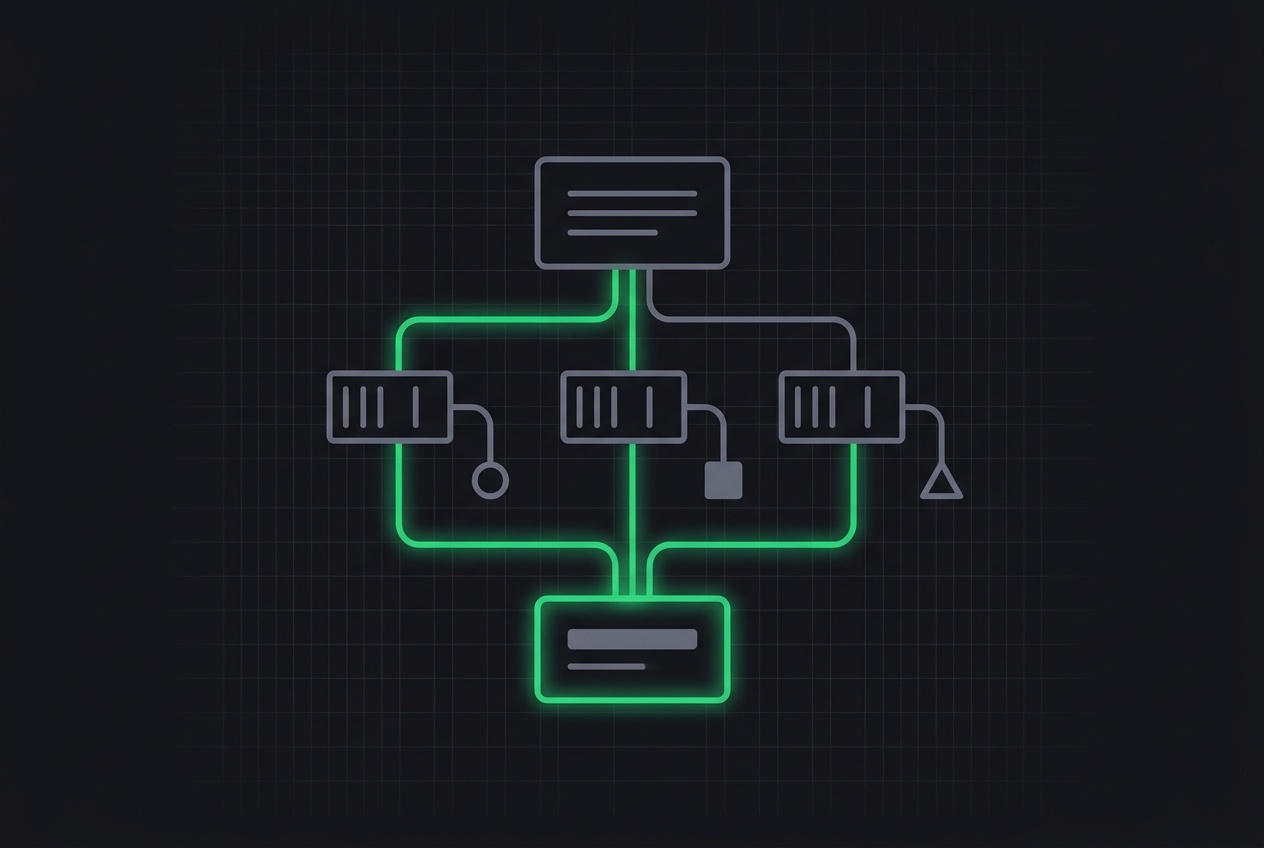
Generative AI agent assist tools are software layers that use Large Language Models (LLMs) to provide real-time guidance, automated summaries, and instant knowledge retrieval to agents during live customer interactions. In 2025, these tools have moved from experimental pilots to core operational requirements for reducing cognitive load and accelerating speed-to-proficiency. When deployed correctly, agent assist technology transforms the agent desktop from a static workspace into a dynamic, proactive coaching environment.
Key takeaways
- Auto-summarization provides the most immediate ROI by eliminating manual wrap-up time and improving data accuracy in the CRM.
- Real-time knowledge grounding is critical; the AI must pull from a verified, structured source to prevent "hallucinations" during customer calls.
- Operational success is measured by a reduction in Average Handle Time (AHT) and a decrease in the time it takes for new hires to reach full productivity.
- Agent sentiment improves when the tool is framed as a "co-pilot" that removes administrative drudgery rather than a surveillance mechanism.
Why is Generative AI agent assist the 2025 standard?
Generative AI agent assist has become the standard because it addresses the primary bottleneck in modern CX: the complexity of the agent's desktop. As products become more complex and customer expectations rise, agents are often forced to navigate dozens of tabs and internal documents while maintaining a high-quality conversation. Generative AI acts as a translation layer, processing the customer's intent in real-time and surfacing the exact answer or next best action without the agent having to search for it manually.
In previous years, "agent assist" was limited to basic keyword triggers that often surfaced irrelevant articles. The 2025 generation of tools, powered by vendors like Salesforce and Zendesk, uses semantic understanding to grasp the context of a conversation, allowing for much more nuanced and helpful suggestions.
How does auto-summarization reduce operational overhead?
Auto-summarization reduces operational overhead by automating the "After-Call Work" (ACW) that typically accounts for 10% to 20% of an agent's total handle time. Instead of an agent typing a manual summary of the interaction, the AI generates a structured note—including the issue, the resolution, and any pending follow-ups—and pushes it directly into the CRM.
This doesn't just save seconds; it ensures consistency across the entire team. Standardized summaries make it easier for the next agent who handles the customer to understand the history, and they provide cleaner data for the QA team to analyze. If you are looking to refine your efficiency metrics further, see our guide on how to Cut AHT Without Wrecking CSAT: An Operator's Playbook.
What is the role of the knowledge base in AI assistance?
The role of the knowledge base is to serve as the "single source of truth" that grounds the AI’s responses. Generative AI is only as useful as the data it can access; if the underlying documentation is outdated or contradictory, the AI will confidently provide the wrong information to the agent.
To make agent assist effective, ops leads must prioritize a clean, modular knowledge architecture. This is often referred to as Retrieval-Augmented Generation (RAG). Instead of the AI making up an answer based on its general training data, it is forced to look at your specific company PDFs, articles, and policy docs to formulate a response. For tips on building this foundation, read about The Knowledge Base Agents Actually Use.
How do you measure the ROI of agent assist?
Measuring the ROI of agent assist requires looking beyond just the bottom-line AHT and focusing on "Time to Proficiency" and "Escalation Rates."
- Average Handle Time (AHT): Specifically, look for a reduction in hold times (as agents find answers faster) and wrap-up times (due to auto-summarization).
- Time to Proficiency: Track how quickly a new hire reaches the performance level of a tenured agent. AI assistance acts as a safety net, allowing new hires to handle complex queries sooner.
- Manager-to-Agent Ratio: With AI handling basic coaching and real-time guidance, supervisors can often manage larger teams or spend more time on high-level strategy rather than answering "where do I find this policy?" questions.
- First Contact Resolution (FCR): By surfacing the right answer the first time, AI reduces the need for the customer to call back or be transferred to a specialist.
What are the technical requirements for 2025 deployment?
Deploying agent assist in 2025 requires a tech stack that supports low-latency data processing and robust PII (Personally Identifiable Information) redaction.
- Real-time Transcription: If you are running a voice channel, you need a high-accuracy speech-to-text engine (like those offered by AWS or Google Cloud) to feed the conversation into the LLM with minimal delay.
- API Integration: The assist tool must be deeply integrated with your CRM and your WFM software to understand the context of the agent's shift and the customer's profile.
- PII Redaction: Before data is sent to an LLM for processing, sensitive information like credit card numbers or social security numbers must be stripped out to maintain compliance and security standards.
FAQ
Does agent assist replace the need for agent training? No, it supplements training by providing a "just-in-time" knowledge layer. While it reduces the need for rote memorization of policies, agents still need critical thinking and empathy skills to manage the human elements of the interaction that AI cannot yet replicate.
How do agents typically react to these tools? Initial reactions are often wary, but adoption increases quickly when agents realize the tool eliminates the most tedious parts of their job, such as note-taking and searching through messy intranets. Frame it as a tool for their benefit, not just a management tracking device.
What is the biggest risk of implementing AI agent assist? The biggest risk is "AI over-reliance," where agents stop verifying the information provided by the tool. To mitigate this, always include a "source link" in the AI suggestion so the agent can quickly click through to the original knowledge base article to verify the details.
Can this work for small contact centers? Yes, many mid-market CRM platforms now offer "out-of-the-box" AI features that do not require a massive data science team to implement. The key for smaller shops is to focus on one use case first—usually auto-summarization—before moving to real-time coaching.
Scaling agent assist is the most direct path to improving floor efficiency in 2025; start by cleaning your knowledge base and automating your summaries to see immediate operational gains.