
How to run a QA calibration session that actually fixes variance
Stop letting grader bias ruin your data. Learn the tactical steps to run calibration sessions that align your team and ensure consistent agent scoring.
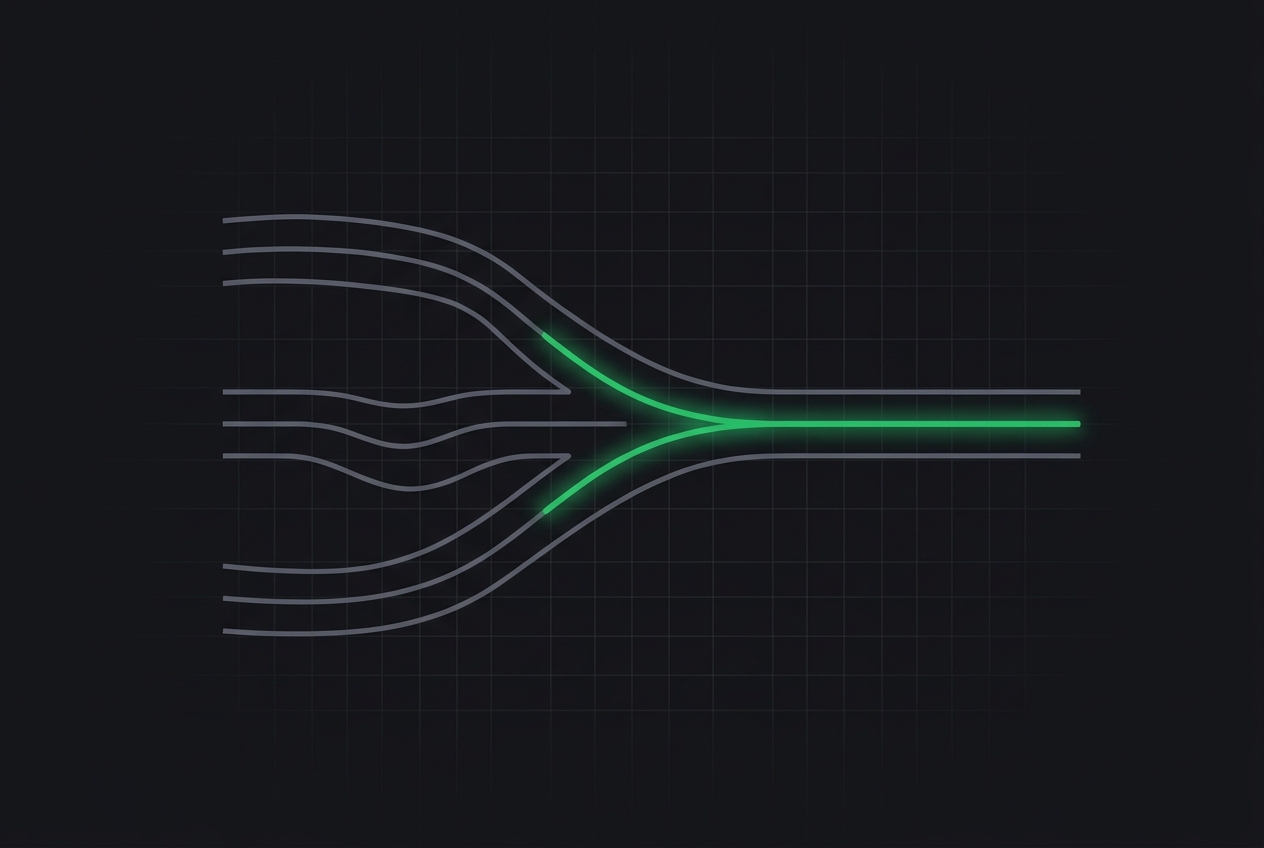
QA calibration sessions are structured meetings where evaluators, supervisors, and team leads score the same customer interactions to ensure everyone interprets the rubric identically. The primary goal is to eliminate "grader drift"—the natural tendency for different analysts to score the same behavior differently based on personal bias or experience. Without these sessions, your QA data is statistically unreliable and cannot be used for performance management or compensation.
Key takeaways
- Blind scoring is mandatory: Evaluators must score the selected interactions independently before the meeting starts to prevent groupthink.
- Focus on the "Gray Areas": Do not calibrate on perfect calls; choose interactions where the rubric is open to interpretation.
- Target <5% variance: The goal is to reach a state where different graders produce scores within a 5-point margin on a 100-point scale.
- Update the rubric immediately: If a session reveals a recurring disagreement, the scorecard itself—not the grader—is often the problem.
Why most calibration sessions fail to improve data
In many contact centers, calibration is a passive exercise where a lead analyst reads a score and others nod in agreement. This creates a "strongest voice" bias, where the most senior person’s interpretation becomes the default, regardless of whether it aligns with the written rubric.
True calibration requires friction. It is a process of identifying where the 5 Design Patterns for QA Scorecards That Agents Actually Respect are being interpreted subjectively. If one supervisor gives a "pass" for empathy because the agent sounded nice, while another gives a "fail" because the agent didn't use a specific phrase, your data is broken.
Research from Gartner's Customer Service & Support practice suggests that as organizations move toward domain-specific AI and more complex human-led interactions, the consistency of human oversight becomes the anchor for all other metrics.
Step 1: Selecting the right interactions
Calibrating on a standard, transactional call is a waste of time. To find the limits of your rubric, you must select "edge case" interactions. Look for:
- High-emotion calls: Where the agent followed the process but the customer remained unhappy.
- Long-duration outliers: Interactions that lasted significantly longer than the average handle time for that intent.
- New product launches: Calls where agents are applying new knowledge for the first time.
If you are moving to 100% QA coverage, you can use automated tools to surface these outliers. For instance, a conversation-intelligence layer like Hear.ai can flag calls with high sentiment volatility or compliance risks, providing a pre-filtered list of high-value interactions for the calibration team to review.
Step 2: The pre-work (The "Blind" Phase)
Never play the call for the first time during the meeting. Send the recording and the scorecard to all participants 24 hours in advance. Every participant must submit their scores to a central coordinator (usually a QA Lead) before the meeting starts.
This prevents "anchoring," where the first person to speak sets the tone for the rest of the group. The coordinator should look for the items with the highest variance. If everyone agreed on "Technical Accuracy" but split 50/50 on "Soft Skills," the meeting should spend 90% of its time on the soft skills section.
Step 3: Managing the discussion
When the meeting begins, do not start with the final score. Start with the specific line items where there was disagreement.
Ask the outliers to explain their reasoning: "Susan, you gave this a zero for 'Ownership.' Mark, you gave it a five. What did you hear that led to that score?"
Force the participants to point to specific timestamps in the audio or specific lines in the transcript. This moves the conversation from "I felt like the agent was rude" to "The agent interrupted the customer at 2:14, which violates our 'Active Listening' standard."
Step 4: Quantifying and reducing variance
You cannot manage what you do not measure. Track your "Calibration Variance Score" over time.
- Perfect Alignment: 100% of graders within 3% of the target score.
- Acceptable Alignment: 100% of graders within 5% of the target score.
- Needs Intervention: Any grader consistently falling more than 10% away from the group mean.
If a specific supervisor is consistently a "hard grader," they are likely demoralizing their team and causing skewed stack rankings. Use the calibration data to coach the coach.
Integrating technology into the calibration loop
Modern QA teams are moving away from manual spreadsheets and toward integrated platforms. Platforms like Zendesk or Salesforce Service Cloud allow you to attach QA scores directly to the ticket, but they don't always handle the calibration workflow well.
Teams often pair their CCaaS platform, such as Five9 or Genesys, with specialized analysis tools. Using Hear.ai to analyze 100% of calls allows the QA team to see if the "calibration consensus" actually holds up across thousands of interactions, or if the team is calibrating on an anomaly that rarely happens in the real world.
According to Metrigy’s CX research, companies that successfully integrate AI-driven conversation intelligence with human-led QA see higher accuracy in their customer sentiment data because the human graders are better aligned on what "good" looks like.
Update your rubric, not just your people
If a calibration session results in a 45-minute debate over a single scorecard question, the question is poorly written.
Common rubric fixes after calibration:
- Remove binary choices for subjective traits: If "Empathy" is a Yes/No, change it to a 1-5 scale with clear definitions for each number.
- Define the "Automatic Fail": Be explicit about what constitutes a zero (e.g., a specific compliance violation or a racial slur).
- Add "N/A" options: Ensure graders aren't penalizing agents for not following a process that didn't apply to that specific call type.
FAQ
How often should we hold calibration sessions? Most high-performing teams hold them weekly for the first month after a rubric change, then move to bi-weekly or monthly once variance stays consistently below 5%. If you introduce a new product or service, resume weekly sessions immediately.
Who should attend the calibration meeting? At a minimum, the QA analysts and a representative sample of Team Leads. Occasionally, invite a high-performing agent to provide the "floor perspective." This increases buy-in and ensures the rubric isn't disconnected from the reality of the job.
What if we can't agree on a score? The QA Manager or the head of Operations must act as the ultimate tie-breaker. Their decision becomes the "Gold Standard" for that specific interaction, and the reasoning must be documented in a central QA Knowledge Base for future reference.
Should agents know about calibration? Yes. Transparency builds trust. When an agent knows that their score isn't just one person's opinion—but is backed by a calibrated, peer-reviewed process—they are much more likely to accept the feedback and change their behavior.
Calibration is the bridge between a scorecard and actual performance improvement. By treating it as a rigorous data-integrity exercise rather than a casual chat, you ensure that your QA program provides the tactical intelligence your floor needs to succeed.
Explore how to scale these standards across your entire operation in our guide to scaling QA coverage beyond the 2% sampling trap.