
Moving to 100% QA coverage: A phased migration blueprint
Transitioning from manual 2% sampling to 100% QA coverage requires a tactical migration plan. Learn how to audit every call using automation and AI tools.
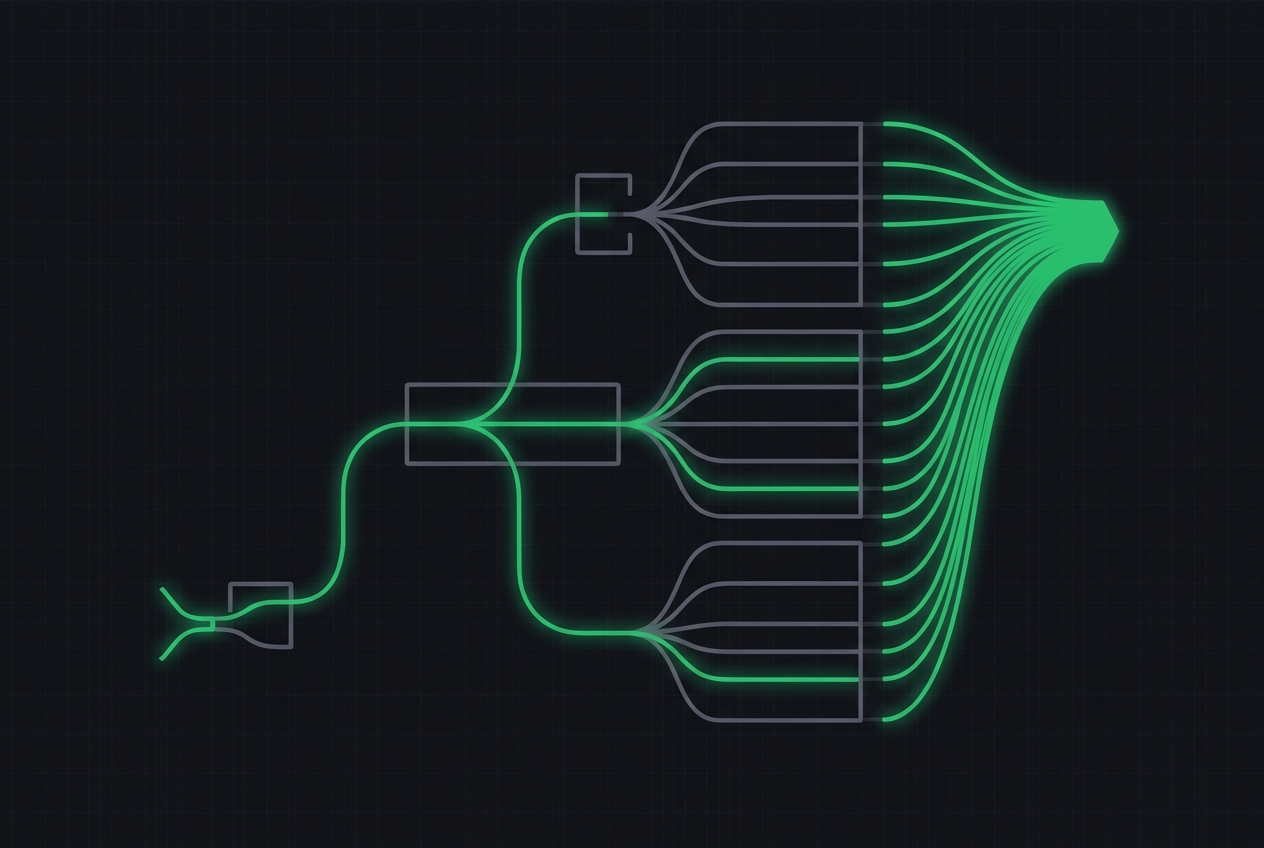
Moving from 2% sampling to 100% coverage involves shifting the QA team's role from manual spot-checkers to strategic insight analysts. Operators achieve this by deploying automated speech analytics to flag high-risk calls and using AI-driven scorecards for routine compliance, allowing human reviewers to focus on complex coaching moments. This transition requires a phased approach that aligns technology, data integrity, and agent feedback loops.
Key takeaways
- Automate the objective: Start by moving binary compliance checks (disclosures, greetings) to automated scoring to free up analyst time.
- Run a silent pilot: Benchmark AI-generated scores against human audits for 30 days before changing agent performance records.
- Focus humans on nuance: Reassign QA headcount to analyze empathy, complex problem-solving, and sentiment trends that AI may miss.
- Update calibration frequently: Maintain a rigorous calibration schedule to ensure automated models do not drift from operational standards.
Why is 2% sampling no longer sufficient for modern ops?
Traditional manual sampling is statistically insignificant and often creates a culture of fear rather than growth. When a QA analyst only listens to two or three calls per agent per month, they are likely to miss critical compliance failures or, conversely, penalize an agent for a single outlier in an otherwise stellar month. This "sampling trap" leads to friction between management and the floor, as agents feel their performance is judged on a lottery rather than their total body of work.
According to Gartner's Customer Service & Support practice, the focus for 2026 is shifting toward domain-specific AI and data protection. This shift suggests that the era of generic spot-checks is ending. Modern contact centers are moving toward total visibility, where every interaction is transcribed and analyzed. This doesn't mean humans listen to every call; it means software like Hear.ai's conversation intelligence scans for keywords, sentiment, and compliance markers, flagging only the interactions that truly require a human eye.
Phase 1: The Infrastructure Audit and Data Pipe
Before you can analyze 100% of calls, your data must be accessible and clean. Many legacy contact centers struggle because their call recordings are trapped in siloed CCaaS platforms or are of such low audio quality that transcription is impossible.
Start by ensuring your CCaaS provider—whether you use Genesys, Five9, or Talkdesk—is integrated with your conversation intelligence layer. The goal is to create a continuous stream where audio is moved to a transcription engine, processed via a Large Language Model (LLM), and then fed into a dashboard.
During this phase, do not change your scoring process. Simply observe the data flow. You need to ensure that the transcription accuracy for your industry-specific jargon (e.g., medical terms or financial product names) is high enough to support automated scoring.
Phase 2: Automating the "Binary" Scorecard
Every scorecard has two types of questions: objective and subjective. To reach 100% coverage, you must offload the objective questions to the machine.
Objective questions are binary (Yes/No):
- Did the agent state the mandatory disclosure?
- Did the agent verify the account holder's identity?
- Did the agent mention the current promotion?
By using a tool like Hear.ai to monitor these compliance points across 100% of calls, you immediately identify systemic risks that a 2% sample would never find. For example, you might discover that an entire shift is skipping a specific legal disclosure because of a misunderstanding in the morning huddle.
As you automate these points, it is critical to keep your agents informed. Transparency prevents the feeling of being "surveilled" by an invisible bot. If agents understand that the AI is there to ensure they get credit for every time they follow the script correctly, the why-qa-scorecards-feel-like-a-trap.html sentiment begins to dissipate.
Phase 3: The "Silent Run" and Calibration
You cannot flip a switch and trust AI scores overnight. A "Silent Run" is a 30-to-60-day period where the AI scores 100% of calls, but the agents are still managed based on the traditional manual audits.
During this phase, your QA leads should perform side-by-side comparisons. If the AI gives an agent a 90% and the human analyst gives them a 75%, you need to find the disconnect. This is where calibration-sessions-qa-data-integrity.html become the most important meeting on your calendar.
Metrigy research into CX/AI success metrics highlights that the most successful teams are those that treat AI as an assistant to the auditor, not a replacement. Use this phase to tune your prompts and ensure the AI understands the context of a conversation. For instance, if an agent interrupts a customer to prevent them from sharing a credit card number over an unsecure line, the AI should recognize this as a positive security action, not a negative "interruption" event.
Phase 4: Shifting Analysts to Root-Cause Analysis
When the machines handle 100% of the compliance checks, what do your QA analysts do? They move up the value chain. Instead of hunting for errors, they analyze trends.
Instead of listening to random calls, your analysts now use the AI's data to find "The Why." They might look at all calls where sentiment dropped sharply in the third minute. They might investigate why Salesforce Service Cloud data shows a high reopening rate for specific ticket types.
Their new workflow looks like this:
- AI Flags: The system identifies 50 calls where customers expressed frustration about a specific shipping policy.
- Human Analysis: The QA analyst reviews these 50 calls (instead of 50 random calls) to identify if the friction is caused by agent phrasing or the policy itself.
- Operational Feedback: The analyst presents a recommendation to the Ops Lead to change the policy or the training module.
How to handle agent pushback during the migration?
Agent anxiety is the biggest hurdle in moving to 100% coverage. To mitigate this, frame the transition as a "fairness initiative." In a 2% world, one bad call can ruin an agent's bonus. In a 100% world, that bad call is balanced by 400 good calls.
Show agents their "automated dashboard" early. Let them see that the AI is catching the times they handled a difficult customer with grace—moments that were previously lost to the void. When agents see that 100% coverage provides a more accurate and holistic view of their hard work, adoption follows.
FAQ
Does 100% QA coverage mean we need more QA staff? No, it typically allows you to maintain or even slightly reduce headcount while significantly increasing the volume of insights. The technology handles the repetitive "listening," while your existing staff focuses on high-impact coaching and strategy.
How do we ensure the AI is not biased against certain accents or dialects? This requires regular bias auditing during your calibration sessions. Compare AI transcriptions and scores across different agent demographics to ensure the LLM is performing equitably, and adjust your transcription engine settings or prompts if discrepancies appear.
What happens if the AI makes a mistake on a scorecard? You must maintain a clear "dispute" process where agents can flag an AI-generated score for human review. If the human finds the AI was wrong, the score is corrected, and the feedback is used to refine the AI's prompt or model logic.
Can we use 100% coverage for performance-based pay? Yes, but only after a successful "Silent Run" and when you have achieved high correlation (usually 90% or higher) between AI scores and human calibration scores. Start with a hybrid model where AI handles compliance-based bonuses and humans handle quality-based bonuses.
Explore how to refine your evaluation criteria by reading about calibration-sessions-qa-data-integrity.html.