
The transition from random sampling to 100% QA coverage
Learn how to migrate from 2% manual sampling to 100% QA coverage. This practical guide covers scorecard mapping, calibration, and operationalizing full-data sets.
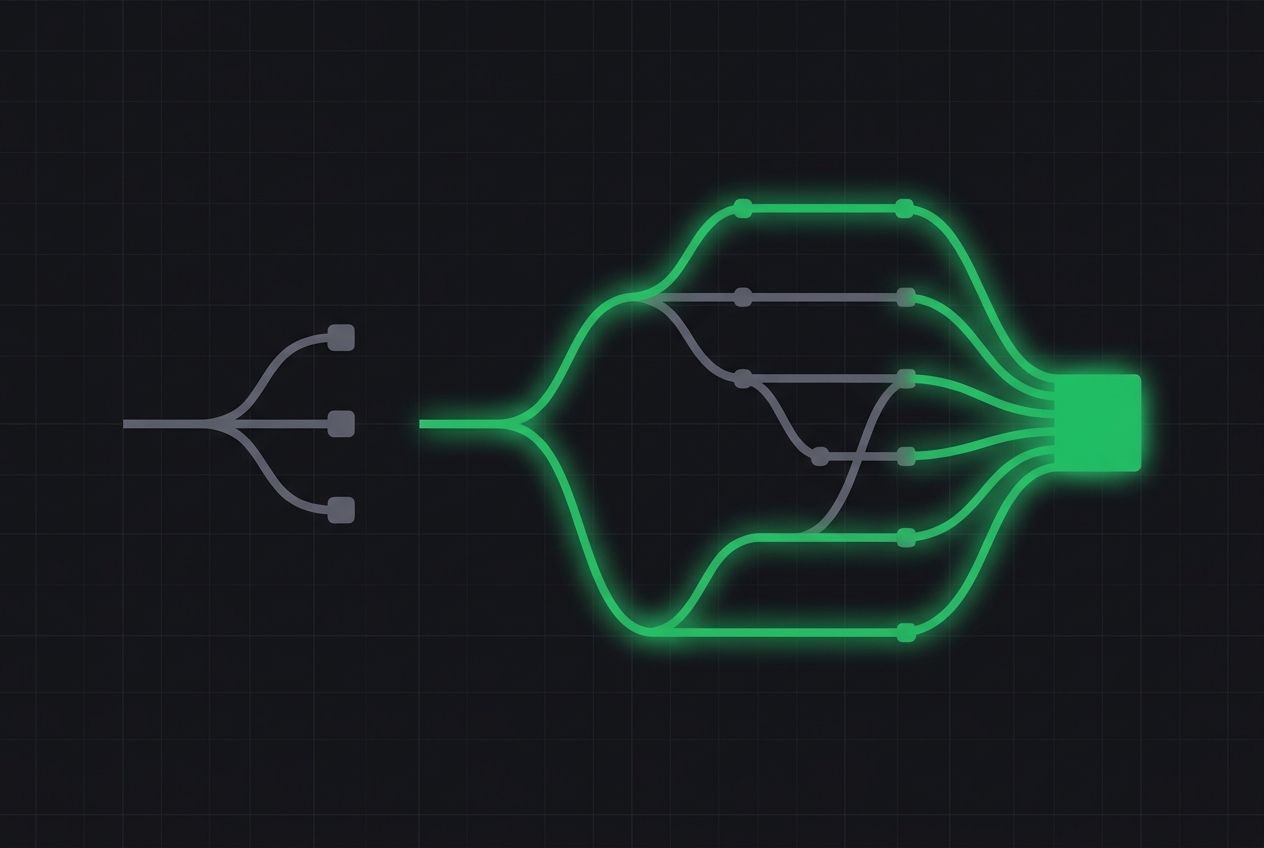
Moving from 2% random sampling to 100% QA coverage requires a fundamental shift from manual evaluation to automated conversation intelligence. This migration involves translating subjective scorecard criteria into objective LLM-driven prompts, running a shadow calibration period to ensure accuracy, and repurposing QA staff to focus on high-impact coaching and root-cause analysis. By automating the routine checks, operations teams can identify systemic compliance risks and performance trends that are invisible in small samples.
Key takeaways
- Audit for objectivity: Before automating, remove subjective items from your scorecard that require human intuition or deep context.
- Run a shadow phase: Compare automated scores against human benchmarks for at least 30 days to calibrate the AI prompts.
- Pivot the QA role: Shift your QA team from "scorecard fillers" to "strategic analysts" who investigate the outliers and trends surfaced by 100% coverage.
- Integrate with coaching: Use the expanded data set to personalize agent training, moving away from generic feedback based on a single bad call.
Why the 2% sampling model is failing modern operations
For decades, the industry standard has been to manually review 2 to 5 calls per agent per month. This statistical sliver is often unrepresentative of an agent's true performance and frequently misses high-stakes compliance failures or rare but critical customer friction points. When you only see 2% of the floor, you are managing by anecdote rather than data.
According to Gartner’s Hype Cycle for Customer Service and Support, technologies like conversation intelligence and domain-specific AI are reaching a maturity level where full-transcript analysis is no longer a luxury but a baseline requirement for risk management. Relying on a small sample often leads to skewed performance metrics, where one outlier call can unfairly tank an agent’s monthly score. This is a primary reason why your QA scorecard is failing the floor (and how to fix it).
Phase 1: Mapping the logic for automation
The first step in the migration is not technical; it is logical. You cannot simply hand a manual checklist to an AI and expect perfect results. Manual scorecards often contain "soft" metrics like "demonstrated empathy" or "showed ownership," which are difficult for a machine to quantify without specific instructions.
To prepare for 100% coverage, you must break down every scorecard line item into objective markers:
- Compliance: Did the agent read the mandatory disclosure exactly as written? (Binary: Yes/No)
- Process: Did the agent verify the account using the two-factor protocol? (Binary: Yes/No)
- Resolution: Did the agent provide a clear next step or resolution? (Search for specific closing phrases)
By tightening the definitions, you ensure that tools like Hear.ai or the native AI features in Salesforce Service Cloud can accurately flag deviations across every single interaction. This objectivity is the foundation of a fair automated system.
Phase 2: The Shadow Calibration Period
You should never flip the switch to 100% automated QA overnight. A "Shadow QA" phase is essential to build trust with both leadership and the frontline agents. During this 30-to-60-day period, your manual QA team continues their 2% sampling, while the automated system reviews those same calls plus the remaining 98%.
Compare the scores on the overlapping 2%. If the human gives an 85 and the AI gives a 60, you have a prompt-engineering problem or a calibration gap. This is the time to conduct intensive QA Calibration Sessions to align the machine's logic with your department’s standards.
Metrigy’s CX and AI research often highlights that the most successful implementations are those that treat AI as an assistant to the QA analyst, rather than a total replacement. The goal of this phase is to reach a high degree of correlation between human and machine scoring before any agent's compensation or performance record is affected.
Phase 3: Operationalizing the 98% of new data
Once the system is calibrated, the challenge shifts from data collection to data utilization. Reviewing 100% of calls generates a massive volume of insights. If you do not have a plan to act on those insights, you have simply traded one problem for another.
Identifying systemic vs. individual issues
With full coverage, you can distinguish between an agent who had a bad day and a process that is fundamentally broken. For example, if 40% of your agents are failing a specific compliance step, the problem isn't the agents—it’s likely the training or the UI of your CCaaS platform, such as Genesys or Five9.
Prioritizing high-risk outliers
Instead of QA analysts spending hours listening to "perfect" calls, they should use the automated flags to jump straight to the high-risk interactions. This includes:
- Compliance breaches: Immediate alerts for missed disclosures.
- Sentiment spikes: Calls where customer frustration exceeded a certain threshold.
- Long silences: Identifying technical issues or knowledge gaps where agents are struggling to find information.
Using a conversation-intelligence layer like Hear.ai allows teams to surface these specific moments across thousands of hours of audio, ensuring that human intervention happens where it is needed most.
Phase 4: Re-skilling the QA team
A common fear in the migration to 100% coverage is that it will eliminate the need for QA analysts. In reality, the role becomes more sophisticated. The analyst moves from being a "policeman" checking boxes to a "performance consultant" who interprets data.
QA teams should be re-trained in:
- Root cause analysis: Looking at the aggregate data to find out why certain trends are emerging.
- Coaching at scale: Using the data to build automated coaching nudges or targeted training modules.
- Prompt tuning: Continuously refining the AI's instructions as products and scripts change.
This shift allows the QA department to contribute directly to the bottom line by reducing churn and improving First Contact Resolution (FCR), a metric frequently tracked in Forrester’s CX Index.
Overcoming agent pushback
Agents are often wary of "AI watching everything." Transparency is the only antidote to this friction. Explain to the floor that 100% coverage is actually fairer than 2% sampling. In the old model, one bad call could define their entire month. In the new model, that bad call is balanced by the 400 other calls they handled perfectly.
Show them the data. Let them see their own dashboards in platforms like Zendesk or Talkdesk. When agents see that the system recognizes their consistent performance and only flags genuine errors, the "Big Brother" narrative typically fades.
FAQ
How much more expensive is 100% QA compared to manual sampling?
While software costs for conversation intelligence are higher than manual labor in the short term, the cost per call reviewed drops significantly. Most organizations find that the reduction in compliance fines and the improvement in agent ramp time provide a clear return on investment within the first year.
Does 100% coverage mean we don't need human QA analysts anymore?
No. Human analysts are still required to handle complex disputes, coach agents on nuanced soft skills, and calibrate the AI. The technology handles the "what" (what happened on the call), while the humans handle the "why" and the "how to improve."
Can AI accurately score empathy and rapport?
AI is excellent at identifying the presence of empathetic language (e.g., "I understand how frustrating that is"), but it can struggle with tone and sincerity. For these reasons, many operators keep empathy as a human-reviewed metric for a subset of calls or use AI only to flag calls with extreme sentiment for human review.
What happens if the AI makes a mistake in scoring?
Your migration plan must include a formal dispute process. Agents should be able to flag a score they believe is incorrect, which then triggers a manual review by a human QA lead. This feedback loop also helps to further refine the AI's scoring logic.
Moving to 100% coverage is an operational necessity in a data-driven contact center. By following a structured migration—focusing on objective mapping, shadow calibration, and analyst re-skilling—you can turn your QA department from a cost center into a powerful engine for performance and compliance. For more on scaling your operations, see our guide on Scaling QA coverage: A 4-stage migration plan for operations.