
Why AI agents hallucinate: A playbook for knowledge base hygiene
Stop AI hallucinations by cleaning your knowledge base. Learn how to audit, atomize, and verify your CX data for better RAG performance and agent accuracy.
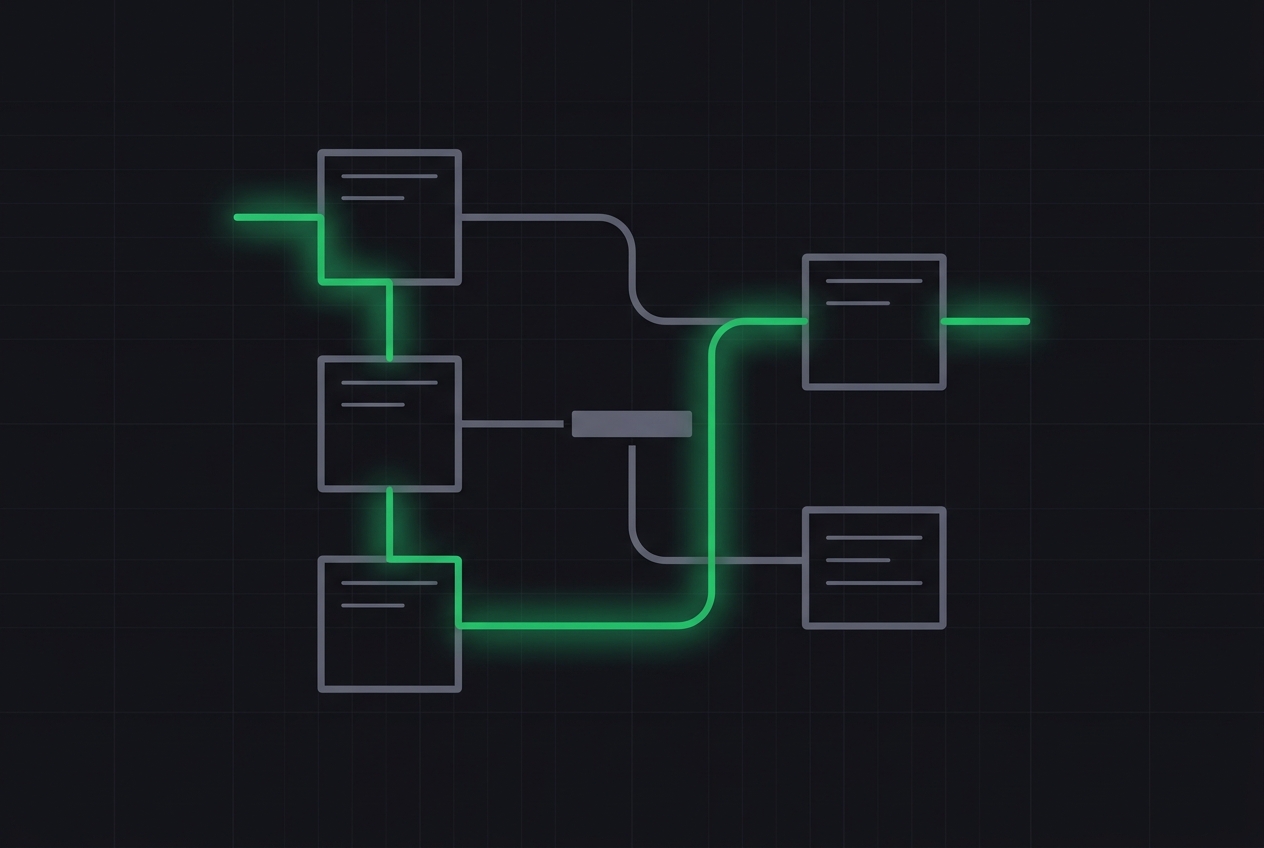
To stop AI agents from hallucinating, operations leaders must transition from managing human-readable documents to maintaining machine-digestible data blocks. Most AI failures in the contact center stem from "data debt"—conflicting, outdated, or poorly structured articles that confuse Large Language Models (LLMs). Success requires a rigorous process of atomization, verification, and feedback loops driven by actual conversation data.
Key takeaways
- Atomize your content: Break long-form PDFs and 2,000-word articles into single-topic "knowledge chunks" to improve retrieval accuracy.
- Eliminate conflicting truths: AI cannot "guess" which of two conflicting refund policies is correct; legacy data must be purged or archived.
- Use conversation intelligence: Identify knowledge gaps by analyzing where agents go off-script or where AI bots fail to provide a source.
- Structure for RAG: Optimize metadata and headers so Retrieval-Augmented Generation (RAG) systems can find the right context in milliseconds.
The reality of the "Data Debt" problem
Most contact centers are sitting on a mountain of documentation written for humans, not machines. While a human agent can skim a long article, ignore the outdated 2022 pricing table, and find the 2024 update at the bottom, an AI model often struggles with this nuance. When an LLM processes a prompt, it looks for the most statistically relevant information within its context window. If your knowledge base (KB) contains three different versions of a return policy, the AI may blend them into a "hallucinated" fourth version that doesn't exist.
According to Gartner’s Customer Service & Support practice, domain-specific AI and data protection are primary themes for 2026. This shift emphasizes that the value of AI is not in the model itself (like GPT-4 or Claude 3), but in the quality of the proprietary data you feed it. If you are planning to how to deploy agent assist without drowning agents in noise, your first priority must be the hygiene of the source material.
Step 1: The Knowledge Audit (Finding the Rot)
Before you can optimize, you must prune. A common mistake is trying to "AI-enable" the entire legacy KB at once. Instead, start with your top 50 most-hit articles.
- The Conflict Check: Search for keywords related to pricing, policy, and compliance. If multiple articles cover the same topic, merge them into a single source of truth.
- The Validity Check: Any article not updated in the last six months should be flagged for manual review.
- The Format Check: Remove information trapped in images or complex tables that LLMs struggle to parse. Convert these into structured text or Markdown.
Step 2: Content Atomization for RAG
Retrieval-Augmented Generation (RAG) is the architecture most CCaaS platforms—such as Zendesk, Salesforce, or Five9—use to power their AI. RAG works best when it can retrieve small, specific "chunks" of information.
Instead of one massive "Shipping & Returns" document, create separate, atomic entries for:
- Domestic Shipping Rates
- International Shipping Restrictions
- Return Window Policy
- How to Print a Return Label
By breaking content down, you reduce the noise in the AI's context window. This makes it significantly less likely that the model will pull a sentence from the "International" section to answer a "Domestic" question. Each chunk should have a clear, descriptive title and relevant tags to help the retrieval engine.
Step 3: Closing the Loop with Conversation Intelligence
You cannot clean a knowledge base in a vacuum. You need to know where the documentation is failing in real-world scenarios. This is where a conversation intelligence layer like Hear.ai becomes a tactical asset for operations.
By analyzing 100% of customer interactions rather than a small sample, you can identify "knowledge gaps"—situations where agents are searching for answers that don't exist or where the AI assistant consistently provides a low-confidence response. If you see a spike in calls regarding a new product feature that isn't in your KB, you can close that gap in hours rather than weeks. This moves your team toward a modern QA playbook: moving beyond the 2% sample, where data from every call informs the training of both your agents and your AI.
Step 4: Verification and Governance
Who owns the truth? In an AI-driven environment, the role of the Knowledge Manager changes from a writer to a curator.
- Human-in-the-loop (HITL): Every AI-generated summary or response should ideally be grounded in a verified KB article.
- Source Attribution: Configure your AI to provide a link to the source article for every answer it gives. If the AI can't find a source, it should be instructed to say "I don't know" rather than guessing.
- Feedback Buttons: Give agents a simple "Thumbs Up/Down" on AI suggestions. A "Thumbs Down" should trigger an automatic ticket for the knowledge team to review the underlying data.
Industry research programs, such as Forrester’s Customer Experience practice, often track how the quality of information directly impacts customer trust and loyalty. Inaccurate AI responses are a fast track to a lower CX Index score.
The Role of Metadata and Hierarchy
While LLMs are good at understanding natural language, they still benefit from structure. Use H2 and H3 headers consistently. Use bulleted lists for steps. Ensure that metadata (tags, categories, and target audience) is applied to every article.
For example, if a policy only applies to "Gold Tier" customers, that should be explicitly stated in the metadata. This allows the RAG system to filter out irrelevant information based on the customer's profile before the LLM even sees the data.
FAQ
How do I know if my knowledge base is ready for AI? Run a pilot with a small set of "high-intent" questions. If the AI provides different answers to the same question or includes outdated information, your KB requires further pruning and atomization before a full rollout.
Should I delete old articles or just archive them? Archive them in a way that is inaccessible to your AI's retrieval engine. LLMs do not know the difference between an "Active" folder and an "Archive" folder unless you explicitly exclude the latter from the search index.
Who should be responsible for cleaning the KB? This is typically a joint effort between CX Operations (who understand the most common queries) and Subject Matter Experts (who verify the accuracy). A dedicated Knowledge Manager should oversee the technical structure and metadata tagging.
Is Markdown better than HTML for AI? Yes. Markdown is lightweight and provides clear structural cues (like # for headers) that LLMs find very easy to parse compared to the cluttered code often found in HTML or the layout complexities of PDFs.
Building a clean knowledge base is not a one-time project; it is a continuous operational requirement. As you refine your data, you move closer to an environment where AI acts as a reliable extension of your best agents, rather than a liability. Explore our related coverage on scaling these systems to ensure your operation remains agile.